
A bedbug infestation rarely begins with a dramatic discovery. It often starts with a few unexplained bites, a tiny rust-colored mark on a sheet, or the uneasy feeling that something is happening after dark. By the time a bed bug is seen, the issue may already extend beyond one bed or one room. Fast, informed action protects your home, your belongings, your guests, and your peace of mind.
The good news is that bed bugs can be eliminated. The key is choosing a treatment that reaches every life stage, including eggs, instead of relying on temporary measures that leave the infestation alive and spreading.
How a Bedbug Infestation Spreads
Bed bugs are expert hitchhikers. They do not fly or jump, but they move easily in luggage, purses, backpacks, clothing, used furniture, delivery items, and vehicles. A single pregnant female or a small group of bugs can establish an infestation in a new location.
They commonly hide close to where people sleep or rest. That includes mattress seams, bed frames, headboards, upholstered chairs, baseboards, nightstands, picture frames, electrical outlets, and cracks in furniture. In apartments, hotels, seniors housing, and other multi-unit properties, they can also move through wall voids, utility openings, hallways, and shared furnishings.
This is why a bed bug problem is not a reflection of cleanliness. Immaculately maintained homes and premium hospitality properties can experience infestations. The issue is exposure and movement, not housekeeping.
Signs You Should Not Ignore
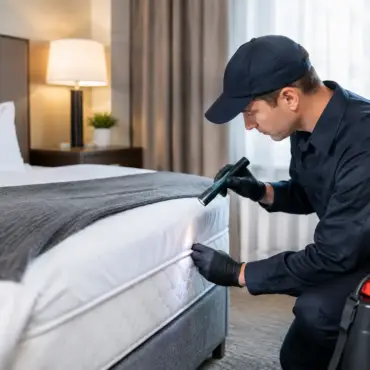
Bites can raise suspicion, but they are not proof on their own. Skin reactions vary widely, and many people do not react at all. A professional inspection is the clearest way to confirm activity, especially before spending money on treatments or throwing away belongings.
Still, there are warning signs worth taking seriously. Look for small dark spots on sheets, mattresses, box springs, furniture, or walls. These may be bed bug droppings. You may also find pale shed skins, tiny pearl-white eggs in protected seams, or reddish stains from crushed bugs after feeding.
Live bed bugs are flat, oval, and brownish-red, roughly the size of an apple seed when fully grown. Younger bed bugs are smaller and lighter in color, which makes them easy to miss. Do not assume an infestation is minor simply because you find only one bug. Bed bugs hide exceptionally well, and daytime sightings can indicate that their usual hiding areas are overcrowded.
For property managers and hospitality operators, the first report should trigger a prompt, discreet response. Waiting for multiple complaints can turn a contained room-level issue into a broader operational problem.
Why Store-Bought Treatments Often Fail
Sprays, foggers, powders, and home remedies can appear to reduce activity for a short time. They may kill a few exposed insects, but bed bugs spend most of their time hidden deep in protected areas. Eggs are particularly difficult to eliminate with many chemical approaches.
Foggers are a common mistake. They do not penetrate the cracks and voids where bed bugs shelter, and they can drive bugs deeper into walls, furniture, or adjacent rooms. Misuse also creates unnecessary exposure risks for people, pets, and staff.
Repeated chemical treatments can become expensive, disruptive, and frustrating. Treatment schedules often require multiple visits because new bugs hatch between applications. Resistance to certain insecticides adds another complication. What worked years ago, or what worked for a neighbor, may not solve the infestation in your property.
Discarding mattresses and furniture is not always the answer either. Bed bugs may remain in the room after the item is removed, and moving infested belongings through a building can spread the problem. Replacing everything before a proper inspection can mean spending thousands of dollars without removing the source.
Why Professional Heat Treatment Is Different
Thermal remediation uses carefully controlled, industrial-grade heat to raise the temperature throughout an affected space to a level that kills bed bugs at every life stage. That includes adults, nymphs, and eggs. When performed correctly, heat reaches areas where bugs hide rather than relying on them to cross a treated surface.
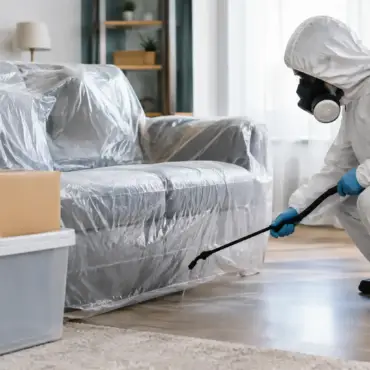
A professional heat treatment is not the same as turning up a thermostat or using a consumer space heater. Effective remediation requires commercial equipment, calibrated sensors, constant temperature monitoring, strategic airflow, and technicians who understand how heat moves through rooms, furniture, wall areas, and complex building layouts.
The major advantage is speed. In many residential situations, heat treatment can resolve an active infestation in a single treatment day. It is also non-toxic, making it a strong option for homes with children, pets, sensitive occupants, and people who want to avoid repeated pesticide applications.
Heat is especially valuable when time and discretion matter. A homeowner does not want weeks of uncertainty. A hotel cannot afford recurring guest complaints. A health care or seniors housing facility must balance treatment effectiveness with resident safety and operational continuity. For these settings, the plan may involve treating selected rooms, adjacent areas, vehicles, common spaces, or an entire structure depending on inspection findings.
Preparation Makes Treatment More Reliable
Professional preparation instructions are not busywork. They are part of a successful outcome. Heat must circulate through the treatment area, and technicians need access to known and likely hiding places.
Preparation requirements depend on the property and treatment method, but they commonly include laundering and drying clothing or linens on high heat, reducing unnecessary clutter, removing heat-sensitive items, and following instructions for medications, plants, pets, candles, aerosols, and electronics. Do not bag or move items to another room unless your treatment provider tells you to do so. Moving belongings can transfer bed bugs into previously unaffected spaces.
This is also where specialized support matters. Some residents cannot complete preparation on their own because of mobility limitations, health conditions, workload, or the scale of the infestation. In multi-unit buildings and care environments, a coordinated preparation plan prevents missed rooms and inconsistent results.
A reputable specialist will explain what needs to be done, what can stay, what must be removed, and what happens on treatment day. You should not be left guessing while dealing with an urgent problem.
What to Do the Moment You Suspect Bed Bugs
Avoid sleeping in another room if possible. It feels logical, but bed bugs may follow you and establish new hiding areas. Continue using the bed while arranging an inspection, unless a professional gives different instructions.
Do not use foggers, overapply pesticides, or begin moving furniture through the home or building. If you find a suspected bug, capture it in a sealed container or clear tape for identification. Photograph any visible evidence, note where it was found, and alert the appropriate person promptly if you are a tenant, guest, employee, or resident in a managed facility.
For landlords, managers, and operators, documentation and communication matter. Respond without blame, protect resident and guest privacy, and arrange a qualified inspection quickly. The longer an infestation remains unaddressed, the more likely it is to affect adjacent units, staff areas, storage spaces, or future occupants.
Choosing the Right Bed Bug Specialist
Bed bug elimination is specialized work. Ask whether the provider focuses on bed bugs, how they inspect, whether they can treat eggs, what equipment they use, and how they monitor treatment temperatures. Ask about preparation support, post-treatment guidance, discretion, and experience with your type of property.
A single-family home, a high-rise apartment, a hotel room, a long-term care suite, and a fleet vehicle present different challenges. The right provider does not force every situation into the same script. They assess the scope, identify risk areas, and build a treatment plan that fits the property and the people in it.
BC Bed Bug Expert has focused exclusively on bed bug remediation since 2010, including residential homes, multi-unit buildings, hospitality properties, health care settings, and complex full-building projects. That level of specialization matters when the goal is not just reducing visible activity, but ending the infestation with a safe, discreet, reliable process.
A suspected bed bug problem can feel isolating, but it is a solvable problem. Preserve the evidence, avoid spreading the bugs, and get a professional assessment before improvised treatments make the situation harder. Quick action now can spare you weeks of bites, disruption, and uncertainty later.