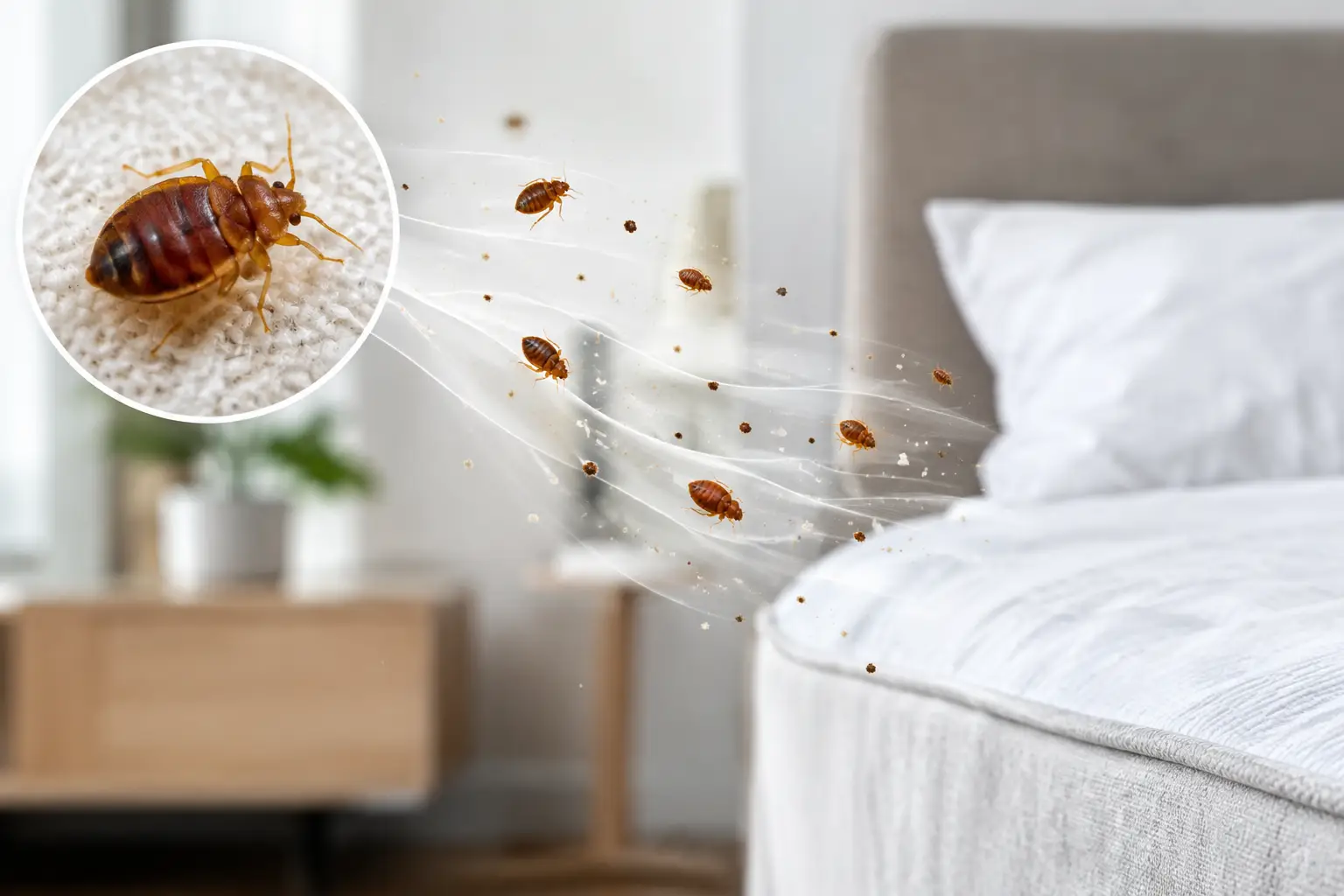
A bed bug sighting can make every movement in a room feel suspicious. You may wonder whether one can fly across the room, drift through a vent, or drop from the ceiling onto a bed. The direct answer to are bed bugs airborne is no. Bed bugs do not have wings, cannot fly, and do not float through the air like airborne insects or dust.
That does not make them harmless travelers. Bed bugs are expert hitchhikers. They crawl into luggage, clothing, purses, boxes, furniture seams, and other belongings, then move to a new location with their host. Understanding that difference matters because it tells you where to look, how to avoid spreading them, and why a complete treatment is far more reliable than reacting to one visible bug.
Are Bed Bugs Airborne or Do They Crawl?
Bed bugs are flat, wingless insects that move by crawling. They are not airborne, and they do not jump like fleas. Their bodies are designed to hide in narrow cracks, not to fly or leap. An adult bed bug can move surprisingly quickly across a floor, wall, bed frame, or upholstered chair, especially when it is seeking a blood meal or a new hiding place.
People sometimes mistake a bed bug’s movement for airborne activity when they see one on a wall, curtain, or ceiling. A bug may have crawled there from a nearby crack, behind a headboard, along trim, or through a gap around a pipe or electrical outlet. Gravity can also make a bug fall from an item that is being moved, but that is not the same as flying.
In apartments, hotels, senior housing, and other multi-unit properties, bed bugs may travel through openings around utility lines, baseboards, hallways, and shared furnishings. They still crawl. The risk comes from connected spaces and moved belongings, not from bugs floating through the building’s ventilation system.
How Bed Bugs Really Spread
Bed bugs spread when people or objects carry them from one place to another. A single bug, or a hidden egg, can be enough to create a new problem if it reaches a suitable hiding place and remains undiscovered.
The most common routes include luggage after travel, used furniture, moving boxes, shared laundry areas, workplace bags, and visitors’ personal belongings. This is why infestations are not a sign of poor housekeeping. Bed bugs are drawn to access to people, not dirt. A spotless home, a luxury hotel room, and a well-managed health care facility can all experience an introduction.
They may also spread within a home when residents move items from room to room. Carrying an infested blanket, chair, suitcase, or pile of clothing into another space can turn a contained problem into a larger one. Throwing away furniture without wrapping it can create the same risk for neighbors, movers, or anyone who later picks it up.
That is why the first goal is not to panic-clean every room. The goal is to prevent transfer while confirming the source and arranging a treatment plan that reaches the bugs where they hide.
Why You May See Bed Bugs Away From the Bed
Despite their name, bed bugs do not live only in mattresses. They prefer to hide close to where people sleep or rest because they usually feed at night. Early infestations are often concentrated around the bed: mattress seams, box springs, bed frames, headboards, nightstands, and baseboards nearby.
As an infestation grows, the insects can spread farther out. They may hide in sofas, recliners, curtain folds, picture frames, books, outlets, carpet edges, wheelchairs, office chairs, and luggage. In hospitality or commercial settings, they may be introduced in guest rooms, staff areas, transport vehicles, waiting rooms, or upholstered seating.
Seeing a bed bug on the ceiling does not mean it flew there. It often means the insect is following a route along the wall or looking for a new hiding place. It can also be a sign that the infestation has expanded beyond the immediate bed area and needs a thorough inspection.
What to Do If You Suspect Bed Bugs
Avoid actions that make the problem harder to eliminate. Do not move bedding, bags, furniture, or clothing into other rooms unless those items are sealed for treatment. Do not sleep somewhere else in the home if you can avoid it. Bed bugs may follow you, and a new sleeping location can create a second infestation area.
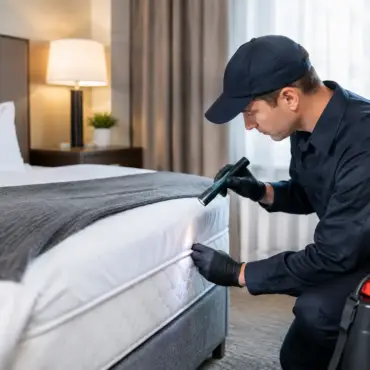
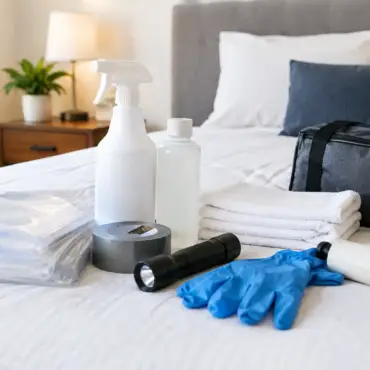
If you find a suspected bed bug, capture it in a sealed container or clear bag for identification. Check common hiding points with a flashlight, including mattress piping, bed joints, the back of the headboard, and furniture near where people sleep. Look for live insects, pale shed skins, tiny white eggs, or small dark spotting. Bites alone cannot confirm bed bugs because many skin conditions and other insects can cause similar marks.
Be cautious with over-the-counter sprays, foggers, and bug bombs. These products rarely reach the deep cracks where bed bugs and eggs hide. Some can drive insects into new areas, leave behind residue, or create unnecessary exposure risks for occupants, pets, and staff. Repeated chemical applications often prolong the disruption without resolving the source.
For multi-unit buildings, hotels, health care settings, and senior living facilities, quick reporting is especially important. Management needs a controlled response that protects residents and guests, limits unnecessary disturbance, and assesses adjacent areas when appropriate. A discreet professional inspection provides clearer answers than widespread, uncoordinated spraying.
Why Heat Treatment Stops Hidden Bed Bugs
A bed bug treatment must kill more than the bugs you see. Eggs can be concealed in furniture joints, wall gaps, fabric folds, and other protected locations. If even a small number survive, the infestation can return weeks later.
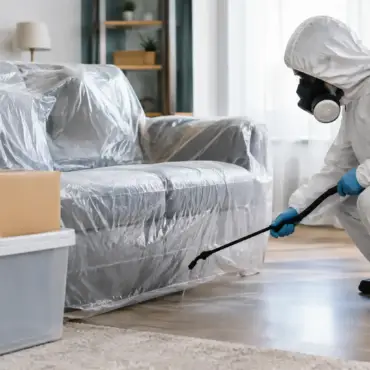
Professional thermal remediation uses carefully controlled, industrial-grade heat to raise the temperature throughout the treatment area to levels lethal to bed bugs at every life stage. Proper heat treatment is not simply placing a heater in a room. It requires strategic equipment placement, air movement, temperature monitoring, and trained technicians who ensure heat reaches difficult areas without damaging the property.
The main advantage is reach. Heat can penetrate the spaces where bed bugs hide without relying on residents to identify every crack or apply chemicals repeatedly. When performed correctly, it kills live bed bugs and eggs in a single treatment cycle. It is also a non-toxic approach, which is particularly valuable for homes with children or pets and for sensitive environments such as health care facilities and senior housing.
Preparation still matters. Electronics, heat-sensitive items, medications, plants, and certain belongings may need specific handling before treatment. A specialist should provide clear prep instructions and practical support, especially when residents are elderly, mobility-limited, or managing a large property. Good preparation protects belongings while allowing the treatment to work as intended.
When a Fast Professional Response Matters Most
You do not need to wait until you see bugs in multiple rooms. Prompt action is wise after a confirmed identification, repeated unexplained signs near sleeping areas, a known exposure in a high-risk setting, or a bed bug found after travel. Early intervention can reduce treatment scope, disruption, and the chance of spreading bugs to other spaces.
For property managers and hospitality operators, speed also protects occupancy and reputation. The right response is confidential, organized, and evidence-based. It should address the affected room or unit, consider pathways to nearby areas, and give occupants clear instructions without creating unnecessary alarm.
Bed bugs may be unsettling, but they are not airborne and they are not unbeatable. Treat the discovery as a contained problem that deserves a specialized response, not as a reason to discard everything you own or turn your home upside down. The sooner the source is identified and treated properly, the sooner your space can feel like yours again.