Waking up with itchy marks is unsettling. Finding a small dark spot on your sheets can be worse. The top signs of bed bug infestation are often subtle at first, and many people dismiss them as allergies, mosquitoes, or a laundry issue. That delay gives bed bugs time to spread from the bed to nearby furniture, luggage, adjoining rooms, and other units.
Bed bugs are not a sign of poor housekeeping. They are expert hitchhikers that can arrive through travel, visitors, used furniture, shared walls, moving trucks, health care settings, or public transit. Early recognition matters because a small, localized problem is generally faster and less disruptive to address than an infestation that has had time to expand.
Top Signs of Bed Bug Infestation in Your Home or Property
No single clue confirms bed bugs on its own. Skin reactions vary widely, stains can come from other sources, and many pests leave marks that look similar at a glance. But when several signs appear together, especially around where people sleep or rest, it is time for a professional inspection.
Bites that appear after sleeping
Bed bug bites often show up on exposed skin, including the arms, shoulders, neck, hands, face, and legs. They may look like small red, itchy welts, sometimes grouped closely together or arranged in a rough line. A person may notice new marks in the morning, although the reaction can be delayed for hours or even days.
Bites alone are not proof. Fleas, mosquitoes, skin sensitivity, eczema, and contact irritation can all be mistaken for bed bug bites. Just as importantly, some people have little or no visible reaction. In a shared home, hotel, senior living facility, or multi-unit building, one person may react strongly while another sleeping in the same room has no marks at all.
Treat unexplained bites as a reason to inspect, not as a diagnosis. Avoid relying on online photos or self-diagnosis when the stakes involve tenants, guests, family members, or a facility’s reputation.
Rust-colored or black spotting on bedding
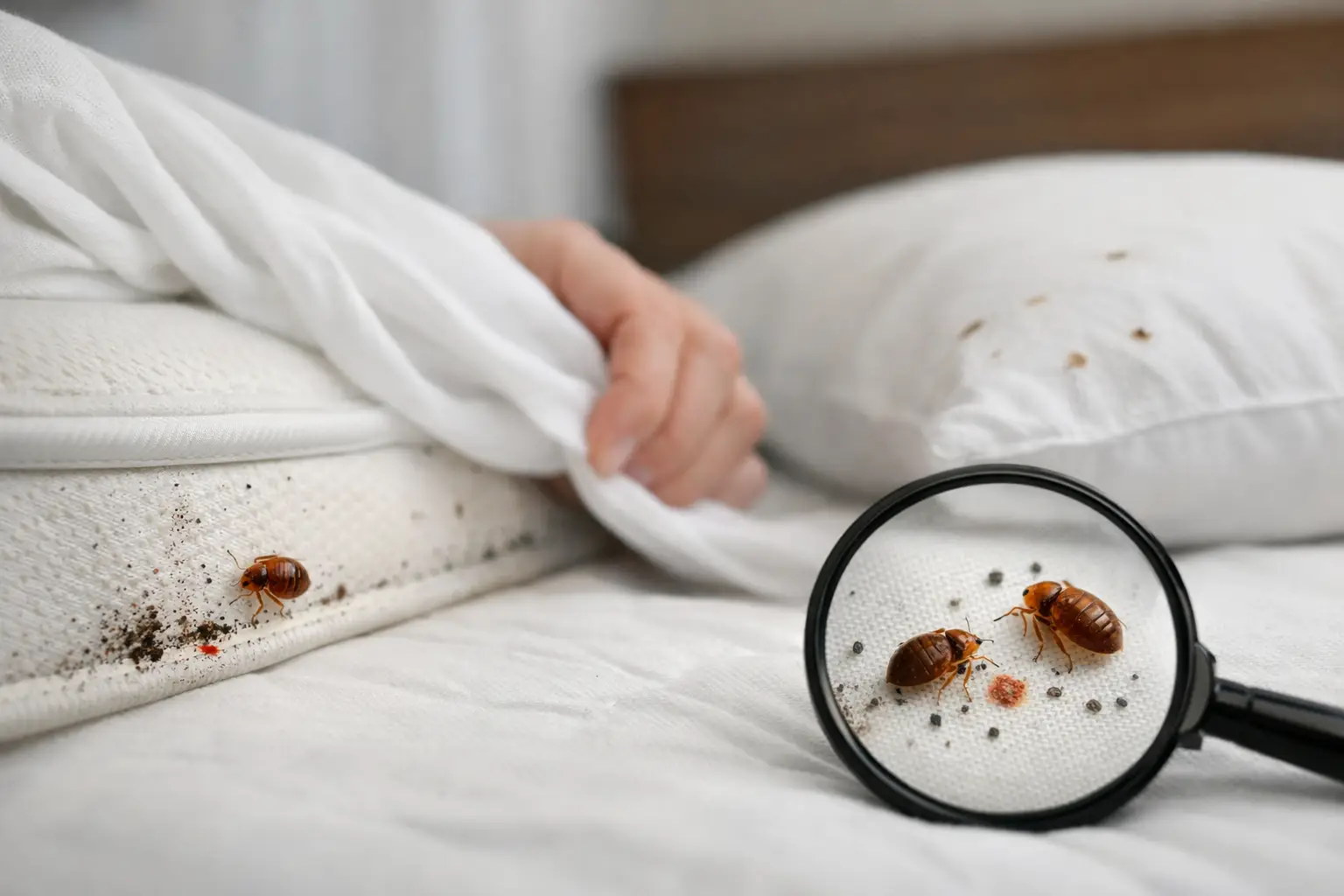
Bed bugs leave behind tiny dark fecal spots. On light sheets, pillowcases, mattresses, box springs, upholstered furniture, or walls, these may look like black ink dots or small rusty stains. Fresh spots can smear slightly when touched with a damp cloth.
Also look for small reddish-brown smears on sheets. These can occur when a recently fed bed bug is crushed while someone moves in bed. A single mark is not necessarily alarming, but repeated spotting near sleeping areas deserves attention.
Focus your search on seams, folds, piping, labels, and crevices. Bed bugs prefer tight, protected spaces close to a sleeping or resting host. Their evidence is often hidden rather than sitting in the open center of a mattress.
Live bugs, shed skins, or pale eggs
An adult bed bug is flat, oval, and reddish-brown, usually about the size of an apple seed. Young bed bugs are smaller and lighter in color, which can make them harder to see. After feeding, bed bugs become more swollen and darker.
As they grow, bed bugs shed their skins. These pale, translucent shells may collect around mattress seams, bed frames, headboards, cracks in furniture, baseboards, and upholstered seating. Their eggs are tiny, whitish, and often cemented into protected cracks.
Finding a live bug, shed skin, or egg is a stronger indicator than bites alone, but identification still matters. Carpet beetle larvae, ticks, cockroach nymphs, and other household insects can be misidentified. If possible, contain a suspected specimen in a sealed clear bag or jar for professional confirmation. Do not move it through the property in an open container.
A sweet, musty odor in a concentrated area
Larger or established infestations can produce a distinct musty, sweet odor. People describe it differently, but it is often noticeable near a heavily affected bed, sofa, room, or storage area. The scent comes from bed bug pheromones and can become more apparent when populations are high.
Odor is not usually an early warning sign. It can also be confused with mildew, dirty laundry, pet bedding, or a poorly ventilated room. Still, when that smell appears alongside spotting, bites, or visible insects, it adds weight to the evidence.
Bed bugs appearing beyond the mattress
Bed bugs do not only live in beds. Once an infestation grows, they may hide behind headboards, inside nightstands, under loose wallpaper, along baseboards, in curtain folds, beneath carpet edges, inside electrical outlet areas, and in upholstered chairs or couches. They can also travel in bags, clothing, mobility equipment, vehicles, and personal belongings.
In apartments, condos, dormitories, hotels, care facilities, and other connected properties, activity in one room may affect neighboring spaces. A tenant or guest can be seeing the first signs while the source is nearby but not directly inside their own bed. That is why inspection and treatment planning need to match the building, not just the complaint location.
Where to Inspect Without Spreading the Problem
A careful inspection is useful, but aggressive searching can make an infestation harder to contain. Do not drag furniture from room to room, carry an unsealed mattress through hallways, or start sleeping in another room. Bed bugs can follow people to a new sleeping location, creating another harborage area.
Start with the bed and the furniture within a few feet of it. Use a flashlight to inspect mattress seams, the box spring, bed frame joints, headboard mounting points, nightstand drawers, and nearby baseboards. Check sofas and recliners in rooms where people regularly nap or spend long periods sitting down.
For commercial and institutional properties, keep the response discreet and organized. Document the room, unit, or vehicle involved; preserve any specimen; and avoid assigning blame. A focused response protects residents, guests, staff, and the property more effectively than panic-driven cleaning or public discussion.
What Not to Do When You Suspect Bed Bugs
Throwing out a mattress is rarely a complete solution. Bed bugs may already be in the frame, furniture, wall gaps, or nearby rooms, and discarded items can spread the problem if not handled correctly. Foggers and over-the-counter sprays can also drive bugs deeper into cracks or into adjoining areas without eliminating eggs.
Avoid using alcohol, gasoline, kerosene, or excessive pesticides indoors. These methods can create serious fire, health, and exposure risks while failing to solve the infestation. Repeated chemical spot treatments may seem less expensive initially, but they can become costly when bugs survive, reproduce, or spread.
Laundry can help manage washable items when done correctly. Bag items before moving them, place them directly into the dryer as appropriate for the fabric, and use high heat long enough to kill all life stages. Clean items should be sealed or kept away from the affected area until treatment is complete. Do not assume washing alone is enough, especially if water temperature and drying time are inadequate.
When Professional Bed Bug Treatment Is the Right Move
Call a specialist promptly when you find physical evidence, bites are recurring, more than one room is affected, or the property includes shared walls and common spaces. Fast action is particularly important for hotels, health care environments, senior housing, rental properties, and workplaces, where one unresolved issue can disrupt operations and affect many people.
A professional inspection determines whether the evidence is bed bugs, where activity is concentrated, and how far it may have traveled. That assessment is essential because treatment decisions depend on the property type, clutter level, building construction, adjacent units, and whether belongings have already been moved.
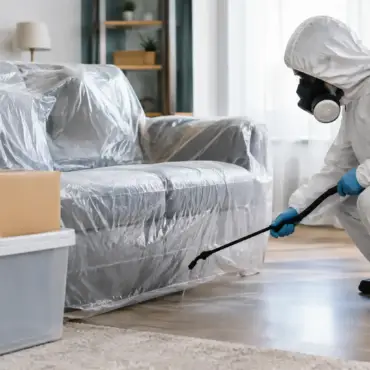
Thermal remediation uses controlled industrial heat to raise the temperature of an affected space to levels lethal to bed bugs and their eggs. When planned and monitored by trained specialists, it can treat the full room and many difficult hiding places in a single treatment cycle without filling the living space with toxic residue. Heat treatment is not a shortcut, though. Proper preparation, temperature monitoring, room setup, and post-treatment guidance determine whether it performs as intended.
BC Bed Bug Expert provides discreet inspections, preparation support, and specialized thermal remediation for homes, multi-unit buildings, hospitality properties, vehicles, and complex facilities. The goal is not simply to kill the bugs that are visible. It is to eliminate the infestation thoroughly while minimizing disruption to the people who live, work, or stay there.
A Calm Response Prevents a Bigger Problem
Bed bugs create understandable stress, but they are a solvable pest problem. Keep the affected area contained, avoid moving belongings unnecessarily, save evidence when you can, and get a qualified assessment before spending money on products that may only scatter the infestation. Acting early gives you more control, protects the people around you, and makes a clean resolution far more achievable.