
A bed bug rarely sits out in the open waiting to be found. It hides within a few feet of where people sleep or rest, then comes out when the room is quiet. Knowing how to find bed bug hiding spots can help you act quickly, avoid spreading the problem, and give a professional the information needed to treat it effectively.
Do not assume a clean home cannot have bed bugs. These insects travel in luggage, furniture, clothing, delivery items, and shared building spaces. They are not a sign of poor housekeeping. What matters is finding credible evidence early and avoiding the common mistakes that scatter bugs into new rooms.
Start With the Places Closest to Where People Sleep
Bed bugs prefer narrow, protected cracks near a blood meal. In a bedroom, the bed is the first place to inspect because it gives them easy access at night. Use a bright flashlight and move slowly. A credit card or thin plastic card can help trace seams and crevices without tearing fabric.
Begin with mattress piping, labels, handles, tufts, and the underside of the mattress. Pay particular attention to folded seams and any tear in the fabric. Then inspect the box spring, including its lower edge, corner guards, fabric cover, staples, and the wooden frame beneath it. Bed bugs often hide inside a box spring where a quick visual check cannot reach.
The bed frame deserves the same level of attention. Look at joints, screw holes, slats, headboard mounts, caster wheels, and the space where the frame meets the wall. If the headboard is attached to the wall, inspect behind it carefully. A small infestation may be limited to these areas, while an established infestation can extend into nearby furniture and wall openings.
What Bed Bug Evidence Looks Like
You are looking for more than live bugs. In many cases, the evidence is easier to find than the insects themselves. Adult bed bugs are flat, oval, reddish-brown, and about the size of an apple seed. Young bed bugs are smaller, lighter in color, and harder to spot. Eggs are tiny, pearly white, and usually glued into protected cracks.
The most useful signs include:
- Dark brown or black spotting along seams, joints, and edges. These are fecal marks and often look like small ink dots.
- Pale yellow shed skins, left behind as immature bed bugs grow.
- Tiny white eggs or eggshells in tight crevices.
- Live bed bugs, often clustered in undisturbed areas.
- Small rust-colored blood marks on sheets or pillowcases.
A bite alone is not proof. Bed bug bites can resemble mosquito, flea, or skin reactions, and some people have no visible reaction at all. Confirming physical signs is far more reliable than trying to identify an infestation from bites alone.
Expand Your Search Beyond the Bed
If bed bugs have been present for more than a short time, they may be hiding beyond the mattress and frame. Inspect nightstands first, especially drawer joints, undersides, screw holes, and the back panel. Empty drawers one at a time over a light-colored sheet or surface so small evidence is easier to see.
Check upholstered chairs, sofas, recliners, and office seating in rooms where people sleep, nap, or spend long periods sitting. Focus on cushion seams, zippers, fabric folds, staple lines, and the gap under skirts or dust covers. Bed bugs can also hide inside furniture frames, making a surface-level inspection incomplete.
Move outward from the sleeping area in a methodical pattern. Look behind picture frames, mirrors, loose wallpaper, electrical outlet covers, curtain hems, baseboards, carpet edges, and cracks in flooring. In apartments, hotels, seniors housing, and other multi-unit properties, bed bugs may move through wall voids, utility penetrations, hallways, or adjoining units. That is why a single-room search can miss the full scope of the issue.
Luggage, backpacks, laundry hampers, and recently acquired furniture should also be checked. If someone has recently traveled, hosted overnight guests, moved, or brought in a used item, those details can help identify where the problem began.
How to Find Bed Bug Hiding Spots Without Spreading Them
Searching too aggressively can make an infestation harder to control. Do not carry pillows, blankets, furniture, or loose items into another room while you inspect. Bed bugs can hitchhike on anything you move, turning one affected area into several.
Avoid sleeping in a different bedroom before the infestation is addressed. Bed bugs may follow their food source and establish themselves in the new room. The same applies to moving to a sofa. Staying put may feel uncomfortable, but it helps contain activity and gives a treatment team a clearer target.
Do not use foggers, bug bombs, alcohol sprays, or random over-the-counter chemicals. These products often fail to reach hidden bed bugs and may drive them deeper into walls, furniture, or adjacent rooms. They can also create fire, respiratory, or pesticide exposure risks. A bed bug problem is not solved by killing the few insects you can see. Eggs and concealed bugs must be eliminated too.
If you find a suspected bug, capture it without crushing it. Place it in a sealed container or clear tape, then keep it for identification. Take clear photos of stains, skins, and suspected harborages. Property managers and professional inspectors can use this information to assess the situation faster.
When a Professional Inspection Is the Right Next Step
A careful visual inspection can reveal obvious activity, but bed bugs are exceptionally good at hiding. They can fit into a crack no wider than a credit card and remain out of sight for long periods. A professional inspection is especially valuable when bites continue but you cannot find evidence, when activity may involve multiple rooms or units, or when a hospitality, health care, or senior living property needs a discreet, documented response.
Experienced bed bug specialists know where infestations are commonly missed: inside box springs, behind fixed headboards, in furniture cavities, around electrical fixtures, and within structural gaps. They can also distinguish bed bug evidence from carpet beetles, fleas, cockroaches, bat bugs, and ordinary household staining. Correct identification prevents wasted money and unnecessary treatment.
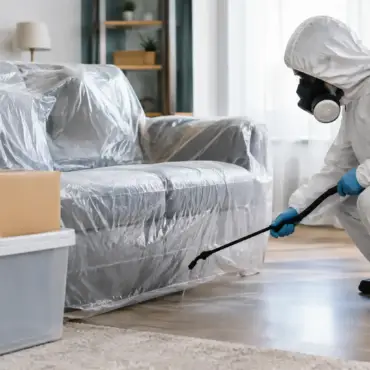
For active infestations, industrial heat treatment is often the fastest path to full control. Properly delivered thermal remediation raises the temperature throughout the affected space to levels that kill bed bugs at every life stage, including eggs. Unlike repeated spot spraying, it is designed to reach bugs hidden deep in furniture, wall areas, and other difficult locations. Preparation still matters, and the approach may vary based on the property, clutter level, building layout, and extent of activity.
A Practical Inspection Order for Homes and Facilities
A consistent search prevents missed areas. Start at the primary sleeping or resting location, inspect the bed and nearby furniture, then work outward through the room. Continue to adjoining rooms, shared walls, laundry areas, lounges, staff rooms, and vehicles if people regularly rest there.
For property managers and facility operators, document the unit number, room, date, observed signs, and any reports from occupants. Do not publicly identify affected residents or rooms. Bed bug response should be private, prompt, and coordinated. In multi-unit buildings, treating only the unit where a report originated may not be enough if bugs have already moved through shared pathways.
What to Do After You Find a Hiding Spot
Once you find credible evidence, pause the search-and-spray cycle. Seal and label any sample, reduce clutter without moving belongings to other rooms, and avoid throwing away furniture unless a specialist advises it. Many items can be treated successfully, and discarding them too soon can be expensive while creating another opportunity for bugs to spread.
Arrange an inspection or treatment plan as soon as possible. BC Bed Bug Expert focuses exclusively on bed bug detection and thermal remediation, helping homeowners, landlords, and complex facilities resolve infestations discreetly without relying on repeated chemical applications.
Finding one hiding spot is useful. Finding the full extent of the infestation is what protects your home, residents, guests, or operation. A calm, methodical inspection followed by decisive professional treatment gives you the best chance to stop bed bugs before they spread further.