
A single guest report can put an entire hotel operation under pressure. The right hotel bed bug treatment is not simply about treating one mattress or closing one room. It is about stopping the infestation quickly, protecting guests and staff, limiting downtime, and preventing a small issue from becoming a reputation problem.
Bed bugs do not reflect poor housekeeping. They can arrive in luggage, on clothing, in used furnishings, or through adjoining rooms. But once they are identified, the response must be organized and decisive. Delays give bed bugs more time to spread through rooms, corridors, laundry handling areas, staff spaces, and neighboring units.
Why hotel bed bug treatment requires a specialized response
Hotels present challenges that residential treatments do not. Guests check in and out every day. Rooms turn over quickly. Furnishings are dense, hiding places are numerous, and a treatment plan must work around occupancy, housekeeping schedules, maintenance access, and brand standards.
A bed bug can hide in mattress seams, headboards, nightstands, luggage racks, upholstered seating, baseboards, drapery folds, electrical outlets, and cracks around furniture. Eggs are especially easy to miss. That is why spot spraying visible bugs or replacing a mattress rarely solves the actual problem.
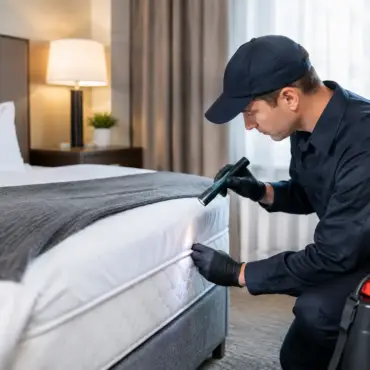
A reliable response begins with a professional inspection. The goal is to determine whether bed bugs are present, identify the extent of activity, and assess adjacent rooms or units that may be at risk. In a hotel, treating only the room where a guest saw a bug can be a costly mistake if activity has already moved beyond that space.
Discretion matters, too. Hotel leadership needs a team that can communicate clearly with management, work professionally around guests and staff, and carry out treatment without creating unnecessary attention. Fast action is not just operationally smart. It is a form of guest care.
The limits of repeated chemical treatments
Chemical treatments are often chosen because they appear straightforward. In practice, they can create a long cycle of repeat visits, room closures, uncertain results, and ongoing staff coordination. Many products do not reliably kill eggs, meaning newly hatched bed bugs can restart the infestation after the initial application.
Chemicals also depend heavily on placement. Every crack, seam, void, and hiding location must be reached, and bed bugs may avoid treated areas or remain concealed until residues lose effectiveness. For hospitality properties, that can mean weeks of monitoring and multiple disruptions to room availability.
Chemical treatment may have a role in certain integrated pest management plans, particularly in complex structural conditions. But when the priority is rapid, whole-room elimination, industrial heat treatment is often the stronger option. The best approach depends on the infestation scope, the property layout, and the need to return rooms to service without a prolonged treatment cycle.
How professional heat treatment eliminates bed bugs
Thermal remediation raises the temperature of the treated space to a level lethal to bed bugs at every life stage, including eggs. Professional equipment circulates heated air throughout the room while technicians monitor temperatures in key locations. This matters because heat must reach deep into furniture, along baseboards, behind headboards, inside cracks, and other places bed bugs hide.
A proper heat treatment is controlled, not improvised. Industrial heaters, high-volume fans, temperature sensors, and experienced technicians work together to create consistent lethal conditions throughout the treatment area. Technicians may reposition furniture, adjust airflow, and monitor cold spots so no area is overlooked.
The benefit for hotels is clear: a professionally treated room can often be returned to service far sooner than a room managed through repeated chemical applications. Heat is non-toxic, leaves no pesticide residue, and can eliminate bed bugs and eggs in a single treatment cycle when the area is prepared and treated correctly.
Attempting to heat a room with portable consumer heaters is not a substitute. It can damage property, create fire risks, and still leave protected areas cool enough for bed bugs to survive. Effective heat remediation requires specialized equipment and trained control of the entire environment.
What happens after a suspected bed bug report
The first hours matter. Staff should avoid moving potentially affected linens, luggage racks, furniture, or loose items into other rooms. Moving items without containment can carry bed bugs into clean areas. Instead, document the room number, guest report, date, and any evidence found, then restrict access until the room can be assessed.
Guest-facing staff should be trained to respond calmly and without speculation. A complaint should be handled with care, but a report alone does not confirm an infestation. Bed bug bites can resemble many other skin reactions, and insects are sometimes misidentified. A professional inspection provides the clarity needed to make the right operational decision.
Once activity is confirmed, management should assess adjacent rooms, including rooms beside, above, and below the affected location. Bed bugs can travel through wall voids, utility penetrations, hallways, housekeeping carts, and personal belongings. The appropriate inspection zone depends on the building design and the evidence found.
Communication within the property should be need-to-know and practical. Housekeeping, maintenance, and management need clear instructions about access, linen handling, room preparation, and release procedures. Broad, uncoordinated responses create confusion. A focused plan keeps the issue contained.
Preparing a hotel room for heat remediation
Preparation helps treatment work as intended and protects the room’s contents. A professional provider should give the hotel clear, room-specific guidance before treatment. Hotels do not need to discard mattresses, box springs, furniture, or guest-room belongings by default. In many cases, these items can be treated successfully with heat.
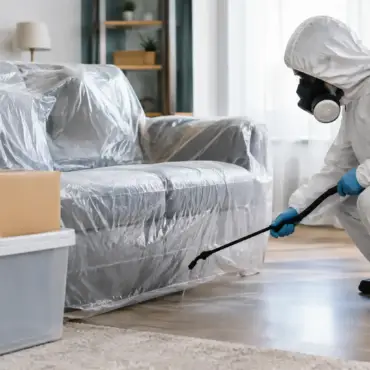
Staff will typically need to remove or protect heat-sensitive items and follow instructions for items such as aerosols, candles, medications, electronics, vinyl materials, plants, and certain décor. Linens and washable fabrics may need to be bagged and processed according to the treatment plan. The objective is not to empty the room unnecessarily. It is to make sure heat can circulate and that vulnerable items are handled correctly.
For larger properties, preparation coordination is often the difference between a smooth treatment day and unnecessary downtime. A specialist can help management organize access, identify room contents that require attention, and plan treatment around operations where possible.
Protecting occupancy, revenue, and guest trust
Every out-of-service room affects revenue. Every unresolved report can affect future bookings. That is why hotel bed bug treatment should be viewed as a business continuity decision, not a routine pest control call.
The lowest upfront quote is not always the lowest cost. A method that requires repeated visits, extends closures, or fails to address eggs can cost more in lost inventory, labor, guest compensation, and online reputation damage. A faster, complete response may carry greater value because it reduces uncertainty and limits the time a room remains unavailable.
Hotels should also maintain a written bed bug response protocol before an incident occurs. It should cover staff reporting, room isolation, inspection authorization, linen handling, treatment approval, communication roles, and documentation. This protects employees from having to improvise during a stressful guest situation.
Training does not need to be complicated. Staff should know what bed bugs and common signs look like, how to report concerns, and what not to move. They should also understand that discretion and empathy matter. Guests who raise concerns want to know they are being taken seriously, not dismissed or blamed.
Choosing a treatment partner for hospitality properties
A hotel needs more than a general exterminator. Look for a bed bug specialist with experience in occupied commercial settings, multi-room treatment planning, industrial-grade heat equipment, detailed monitoring procedures, and a clear process for inspections and preparation.
Ask how the provider confirms activity, whether they assess surrounding rooms, how they monitor temperatures during heat treatment, and what documentation they provide after service. The answers should be specific. A confident provider can explain the process in plain language without making vague promises.
The right partner should also respect your operational realities. A treatment plan for a boutique inn, a large hotel tower, a seniors housing facility, and a health care property will not look identical. Room access, occupancy, safety protocols, furnishing types, and escalation procedures all affect the scope of work.
A bed bug report is stressful, but it does not have to become a long-running disruption. With fast inspection, discreet coordination, and professionally managed heat remediation, hotels can address the problem at its source and focus on what guests remember most: how well they were cared for when it mattered.