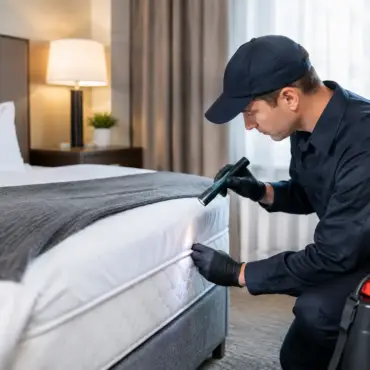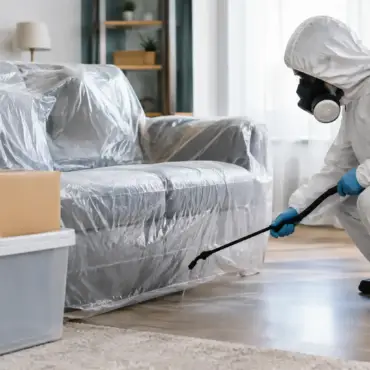
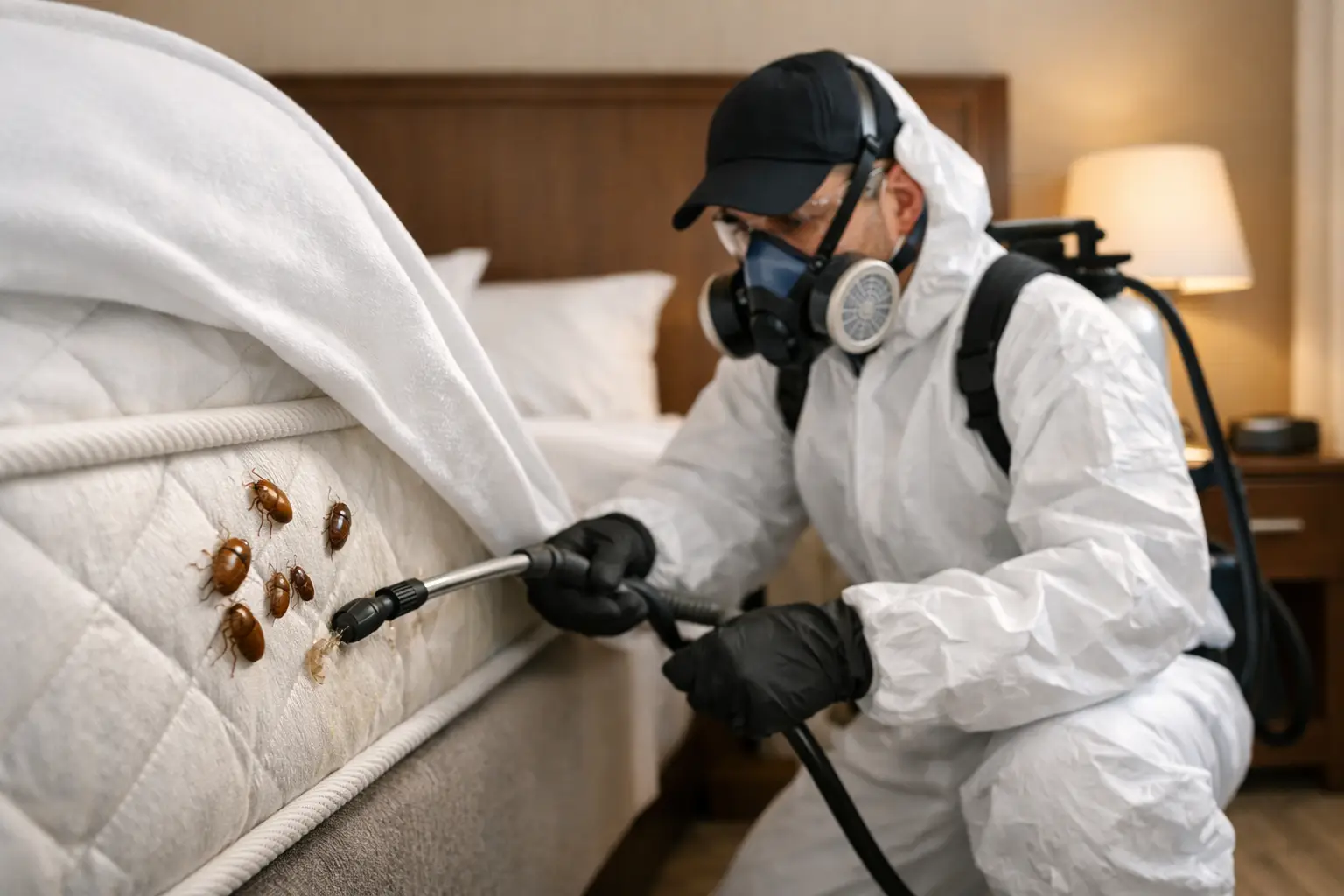
A single bed bug report can become a business problem long before anyone confirms the source. A guest posts a review, a tenant refuses entry, staff begin checking every room, or a care facility faces understandable concern from families. Commercial extermination must do more than remove visible insects. It needs to eliminate bed bugs and eggs quickly, protect the people in the building, and keep disruption under control.
For hotels, apartments, senior living communities, health care facilities, offices, and vehicles, repeated spray treatments often create a long cycle of callbacks, uncertainty, and lost revenue. Professional thermal remediation offers a different path: a targeted, non-toxic treatment designed to reach the places bed bugs hide and end the infestation in a single treatment cycle.
Why Bed Bugs Create a Commercial Emergency
Bed bugs do not stay neatly inside one mattress. In commercial environments, they can move through luggage, laundry, furniture, wall openings, carts, shared seating, and employee belongings. A small issue in one room may affect adjacent rooms, connected units, or an entire floor if it is not assessed correctly.
The cost is not limited to treatment. Hospitality operators may lose bookings or take rooms out of service. Property managers can face tenant complaints, turnover, and disputes over responsibility. Health care and seniors housing teams must balance urgent remediation with resident comfort, safety protocols, and continuity of care. In every setting, delay gives bed bugs more time to reproduce and increases the chance that the issue spreads.
That is why commercial work requires a specialist approach. The goal is not to apply a product and hope activity disappears. The goal is to identify the extent of the infestation, treat every affected area thoroughly, and reduce the risk of reinfestation from overlooked spaces or untreated connected units.
What Commercial Extermination Should Include
Commercial extermination for bed bugs starts with accurate inspection and a practical plan. The treatment method matters, but so does the preparation, room access, scheduling, and follow-up process behind it.
A Clear Scope of the Problem
An experienced inspection helps determine whether activity is isolated, spreading between units, or being reintroduced from another source. This is especially important in multi-unit housing, hotels, and institutional properties, where treating only the room that received a complaint may not be enough.
Inspection findings should guide the treatment boundary. Depending on the property, that may mean one guest room, adjoining suites, a group of apartments, a staff area, a vehicle, or a larger section of the building. The right scope protects both the budget and the outcome. Treating too broadly without evidence can cause unnecessary disruption, while treating too narrowly can leave the real problem behind.
Practical Preparation Support
Preparation is often where commercial treatment plans succeed or fail. Staff, tenants, residents, and guests may need clear instructions about access, personal belongings, laundry, medications, electronics, and sensitive equipment. Those instructions must be realistic for the people involved.
A strong provider does not simply send a generic checklist and leave the property team to manage the consequences. They help coordinate a workable plan, explain what must be moved or protected, and identify where additional prep assistance is needed. For occupied units, senior housing, and health care environments, this planning is as important as the treatment itself.
Discreet, Controlled Service
Privacy matters. A bed bug issue can create embarrassment for tenants and concern among guests, even though bed bugs are not a reflection of cleanliness. Commercial service should be handled discreetly, with professional communication and scheduling that limits unnecessary attention.
Discretion does not mean hiding the problem from the people who need to act. It means giving management, staff, residents, and affected occupants clear information without creating panic. The best communication is calm, factual, and focused on what happens next.
Why Heat Treatment Is Often the Better Choice
Industrial heat treatment raises the temperature in the treatment area to levels lethal to bed bugs at every life stage, including eggs. Specialized equipment circulates heated air while technicians monitor conditions throughout the space. When performed correctly, heat reaches bed frames, upholstered furniture, baseboards, cracks, and other hiding places that can be difficult to address with surface-only methods.
For commercial properties, the biggest advantage is speed. Chemical programs may require multiple visits over several weeks because eggs can survive initial applications or insects may avoid treated surfaces. Heat treatment is designed to kill bed bugs and eggs during one treatment cycle, allowing many rooms or units to return to use much sooner.
It is also a non-toxic option. That can be particularly valuable in occupied apartments, hospitality settings, health care facilities, and homes with children, seniors, or people sensitive to chemical exposure. Heat does require careful setup and professional monitoring, however. Heat-sensitive items, sprinklers, electronics, and building-specific conditions must be evaluated before treatment begins. This is not a do-it-yourself process or a service to assign to a general provider without bed bug expertise.
Commercial Settings Need Different Plans
There is no one-size-fits-all response to a bed bug infestation. A hotel may need rapid room turnaround and a process that protects guest confidence. A property manager may need inspection of neighboring units and documented communication for owners and tenants. A long-term care facility may need treatment scheduling that works around resident mobility, medication, clinical equipment, and family concerns.
Multi-unit buildings are especially complex. Bed bugs can travel through shared walls, utility openings, hallways, and the movement of belongings. A successful plan may include targeted inspections, treatment of confirmed and high-risk areas, resident education, and a clear procedure for reporting future concerns early.
Vehicles create a different challenge. Bed bugs can hide in seat seams, trim, carpets, and stored items, making visual checks unreliable. Thermal remediation can treat the entire enclosed environment without relying on residual pesticides in an area used by drivers or passengers.
For larger portfolios and full-building situations, consulting and operational planning become essential. Management needs a treatment sequence that accounts for access, occupancy, staffing, room turnover, and budget. The answer may be a phased program rather than treating every space at once. What matters is having a plan based on evidence, not reacting to each complaint as an unrelated event.
How to Choose a Commercial Bed Bug Provider
Ask whether the company specializes in bed bugs or treats them as one item on a long general pest-control menu. Bed bugs behave differently from ants, rodents, or cockroaches, and the treatment process should reflect that. A specialist understands inspection patterns, heat-room setup, monitoring, prep requirements, and the operational realities of occupied properties.
Also ask how the provider handles eggs, adjacent areas, and post-treatment concerns. If the answer is only to keep spraying until activity stops, the plan may not deliver the speed or certainty your operation needs. You should understand who will coordinate with your team, what access is required, how occupants will be informed, and when treated spaces can safely return to normal use.
Experience with your property type matters. A solution that works in a vacant single-family home may not be appropriate for a busy hotel, a high-rise apartment building, or a care environment. BC Bed Bug Expert focuses exclusively on bed bug elimination and brings thermal remediation experience to complex commercial and institutional settings where details cannot be overlooked.
Act Before the Problem Becomes More Expensive
Do not wait for multiple reports before arranging an inspection. One confirmed bed bug can justify a careful response, especially where rooms turn over frequently or occupants share walls and common spaces. Early action usually means fewer affected areas, less downtime, and a more manageable treatment plan.
The right commercial extermination partner should leave your team with more than a treated room. You should have a clear understanding of what happened, what was treated, what to watch for, and how to respond quickly if a future concern arises. That clarity gives tenants, guests, residents, and staff something they need most during a stressful infestation: confidence that the problem is being handled properly.