
A single confirmed bed bug in a patient room, resident suite, waiting area, or staff locker can create immediate pressure on a healthcare organization. Leaders need to protect vulnerable people, preserve trust, and keep essential services running without panic or unnecessary closures. Bed bug treatment for healthcare facilities must be fast, discreet, and carefully coordinated with infection prevention, environmental services, and facility operations.
Bed bugs are not known to transmit disease, but that does not make an infestation minor in a hospital, clinic, long-term care home, or assisted living community. Bites can cause discomfort, anxiety, sleep disruption, and skin irritation. More importantly, a delayed or poorly managed response can allow bugs to move between rooms, personal belongings, wheelchairs, transport vehicles, and adjacent units.
Why Healthcare Bed Bug Problems Need a Different Response
Healthcare environments are not ordinary residential spaces. Patients may have limited mobility. Residents may rely on personal care items, medical equipment, and staff support. Rooms may remain occupied around the clock, and every response decision must account for privacy, clinical needs, fire safety, and continuity of care.
This is why a quick spray-and-wait approach is often a poor fit. Chemical treatments can require repeated visits, may leave eggs behind, and can create scheduling complications around occupied rooms. They also depend heavily on precise application and follow-up. In a facility where a single missed harborage can restart the problem, that uncertainty has a real operational cost.
Professional heat remediation offers a more decisive option. Properly delivered industrial heat raises the temperature throughout the treatment area to lethal levels for bed bugs at every life stage, including eggs. The goal is not to chase bugs into another room. It is to eliminate the infestation in a single controlled treatment cycle.
That does not mean heat is appropriate without planning. A qualified bed bug specialist must assess the room, its contents, nearby spaces, building systems, and any heat-sensitive equipment before treatment begins. In healthcare, the quality of that planning is as important as the equipment itself.
Start With Confirmation, Not Assumptions
A bite complaint alone is not proof of bed bugs. Skin reactions vary widely, and many conditions can resemble insect bites. Acting on assumptions can waste staff time, alarm residents, and lead to unnecessary disposal of furniture or belongings.
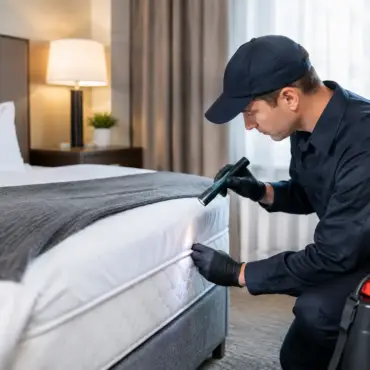
The first priority is a professional inspection. Experienced technicians look for live bugs, cast skins, eggs, fecal spotting, and hidden harborages around beds, upholstered furniture, baseboards, picture frames, mobility equipment, and personal items. In a healthcare setting, inspection may also extend to staff areas, transport equipment, common rooms, and adjacent rooms based on the risk of movement.
When activity is confirmed, the facility can respond with facts. That allows leadership to determine the treatment footprint, coordinate room access, and communicate appropriately with affected individuals and staff. It also prevents the common mistake of treating only the visible location while overlooking the source or nearby spread.
The Heat Treatment Process in a Healthcare Setting
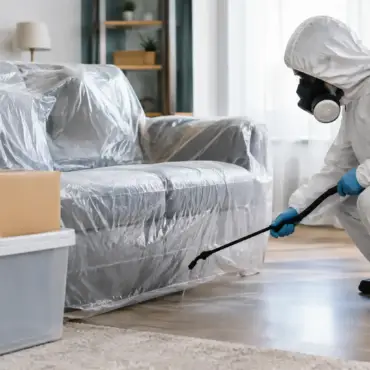
A professional heat treatment is a controlled operation, not simply placing heaters in a room. Industrial heaters, high-volume fans, sensors, and continuous temperature monitoring are used to bring every treatment zone to the required lethal range. Technicians adjust airflow and equipment placement to reach difficult areas, including furniture, wall voids, and cluttered storage spaces.
Before treatment, the provider and facility team identify what must be removed, protected, or relocated. Some medications, aerosol products, wax-based items, certain electronics, medical supplies, and temperature-sensitive materials may need special handling. Clinical equipment should never be moved or treated without approval from the appropriate department and a clear chain-of-custody process.
Patients or residents may need temporary relocation while work is underway. The exact plan depends on the setting. A private resident room in a senior living community may be handled differently from a hospital room with critical care requirements or a busy outpatient clinic. The treatment plan should fit the clinical reality of the space, not force operations into a generic pest-control schedule.
During treatment, technicians monitor temperatures in multiple locations rather than relying on the air temperature near the heater. This matters because bed bugs hide in seams, cracks, furniture joints, and insulated areas where heat can take longer to penetrate. Once the required temperatures are achieved and maintained, the treatment area is cooled, inspected, and released according to the agreed operational plan.
Protect Patients, Residents, and Staff Without Creating Stigma
Bed bugs are hitchhikers. They can arrive in luggage, donated furniture, visitor belongings, laundry, or personal items. Their presence is not a sign that a person or facility is unclean. Still, people may feel embarrassed or worried about being blamed.
A calm, factual response protects dignity and helps staff act quickly. Avoid broad announcements that create fear without offering useful instructions. Instead, provide affected individuals and relevant staff with clear information: what was found, what will happen next, which belongings need attention, and who can answer questions.
Staff training should focus on recognition and reporting, not diagnosis. Employees should know how to document a suspected sighting, preserve a specimen if safely possible, and notify the designated facility contact. They should also understand that moving items from a suspected room without direction can spread the problem.
For residents and patients, support matters. Someone may need help bagging personal belongings, arranging temporary clothing, or understanding why certain items cannot immediately return to the room. A treatment partner that provides prep guidance and practical support can reduce stress while helping the facility maintain control of the process.
Avoid the Mistakes That Cause Repeat Infestations
The biggest mistake is waiting for multiple complaints before taking action. Bed bugs reproduce and spread quietly. Early intervention is usually smaller, less disruptive, and less expensive than a widespread response.
Another mistake is relying on do-it-yourself products or routine housekeeping alone. Cleaning is valuable, but it does not reliably reach hidden eggs and insects inside furniture, wall gaps, or bed frames. Foggers and over-the-counter sprays can also scatter bed bugs into new hiding places, making professional treatment more difficult.
Facilities should also avoid automatically discarding mattresses, chairs, or resident belongings. Disposal can be costly, upsetting, and unnecessary when heat remediation is properly planned. In some cases, removal is appropriate because of condition, contamination concerns, or facility policy. But replacement should be a considered decision, not a reflex driven by fear.
Finally, do not treat the affected room in isolation when evidence suggests broader movement. Adjacent rooms, shared walls, common areas, and high-contact pathways may require inspection. The right scope depends on the evidence, the building layout, and how people and belongings move through the facility.
Choosing a Bed Bug Specialist for Healthcare Facilities
Healthcare operators need more than a general exterminator. Ask whether the provider has experience treating occupied, sensitive, and highly regulated environments. They should be able to explain their inspection process, preparation requirements, monitoring methods, safety procedures, and approach to protecting confidential information.
Look for a company that can coordinate around real operational constraints. That includes working with maintenance teams, environmental services, nursing leadership, property management, and infection prevention personnel. The provider should offer clear documentation, practical prep support, and a treatment plan that accounts for room turnover, patient needs, and building access.
BC Bed Bug Expert specializes exclusively in bed bug elimination and uses industrial-grade thermal remediation to address bed bugs and eggs without relying on toxic chemical treatment. For healthcare and seniors housing environments, that specialization matters. The objective is a controlled, discreet response that solves the problem without adding unnecessary disruption.
Prevention Is About Faster Detection, Not Perfection
No healthcare facility can guarantee that a bed bug will never enter. What a facility can control is how quickly it recognizes a concern and how confidently it responds. Regular staff awareness, a simple reporting pathway, inspection protocols for suspected activity, and clear procedures for handling belongings can reduce the chance of a small introduction becoming a larger operational issue.
Keep the response plan practical. Identify who receives reports, who authorizes inspections, how rooms are temporarily managed, and how affected people receive support. Review that plan before an incident, not while staff are trying to manage an urgent complaint at the end of a busy shift.
When bed bugs are suspected, prompt expert assessment gives healthcare leaders the information they need to protect people, limit disruption, and move forward with confidence.