
A single guest report of bites can put an entire property under pressure. Front-desk teams need answers, housekeeping needs clear direction, and management needs to protect guests without creating unnecessary disruption. Effective hospitality pest management is not about reacting with a can of spray. It is about identifying the issue quickly, containing it discreetly, and using a treatment plan that removes bed bugs at every life stage.
For hotels, motels, resorts, short-term rentals, and extended-stay properties, bed bugs are uniquely disruptive. They do not spread disease, but they can spread rapidly through luggage, linens, furniture, and neighboring rooms. The reputational impact can be severe long before the full scope of an infestation is understood.
Why Bed Bugs Demand a Different Response
Hospitality properties have constant guest turnover, frequent linen movement, shared staff areas, and rooms filled with upholstered furniture. Those conditions make early detection and a controlled response essential. Bed bugs can hide in mattress seams, bed frames, headboards, upholstered chairs, baseboards, luggage racks, and behind wall fixtures. A room that looks clean can still have an active infestation.
The biggest operational mistake is treating a reported room as an isolated problem without a professional inspection. Bed bugs may have been introduced by one guest, but they can move into adjacent rooms, housekeeping carts, storage areas, or staff spaces. The correct inspection radius depends on the layout of the property, the evidence found, occupancy patterns, and how long the problem may have been present.
A second mistake is relying on repeated chemical applications as the entire solution. Chemical treatments can have a role in some pest programs, but bed bugs are difficult to eliminate with spot spraying alone. Eggs may survive, hiding places can be missed, and rooms may require multiple service visits. For a property trying to minimize closures and guest impact, that uncertainty carries a real cost.
What Strong Hospitality Pest Management Looks Like
A reliable response starts before treatment equipment arrives. Management needs a process that protects privacy, preserves evidence, and keeps communication controlled. Staff should know who receives a complaint, how the room is removed from inventory, and who has authority to communicate with affected guests.
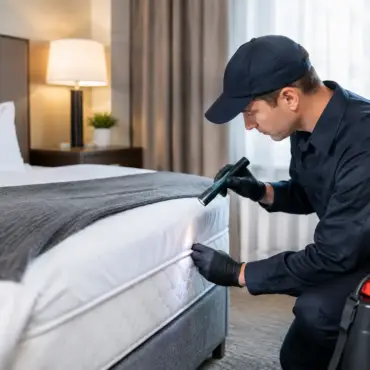
Inspect before you label the problem
Not every bite, skin irritation, or small insect is a bed bug. Misidentification can lead to unnecessary room closures, avoidable expenses, and anxiety for staff and guests. A trained inspection helps confirm whether bed bugs are present and determines where activity is occurring.
Inspection should focus on the reported room but should not stop there automatically. Depending on the situation, adjoining rooms, rooms above and below, nearby linen handling areas, and places where luggage or furnishings move may need review. This is where bed bug specialization matters. The goal is not to create panic or shut down more rooms than necessary. It is to find the true scope before it grows.
Contain activity without broadcasting it
Discretion is part of the service. The affected room should be taken out of service promptly, and staff should avoid moving loose items, luggage, bedding, or furniture into clean areas. Moving items without a plan can spread bed bugs rather than solve the problem.
A clear chain of communication also matters. Housekeeping, maintenance, front desk leadership, and the pest management provider should understand the process, while details remain limited to the people who need them. Guests deserve a prompt, respectful response. Your team deserves instructions that are practical and calm.
Choose a treatment that addresses eggs as well as live bugs
Bed bug eggs are one reason incomplete treatments fail. A treatment can kill visible insects and still leave behind eggs that hatch later, restarting the problem and creating another room closure.
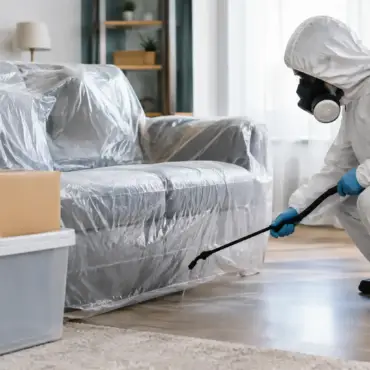
Professional thermal remediation uses controlled industrial heat to raise the temperature throughout the treatment area to levels lethal to bed bugs and their eggs. When performed correctly, heat reaches into cracks, furniture, mattresses, box springs, and other common hiding places. It is a non-toxic approach that can eliminate all life stages in one treatment cycle, often allowing a room to return to service much faster than a multi-visit chemical program.
Heat treatment is not simply placing heaters in a room. It requires commercial equipment, trained technicians, temperature monitoring, strategic airflow, and careful preparation. Electronics, heat-sensitive items, room contents, and building conditions all need to be assessed. A qualified provider manages those details so the treatment is effective without creating preventable damage or downtime.
Protecting Occupancy and Reputation
Every unavailable room affects revenue. Yet returning a room to inventory before an infestation has been fully addressed can cost far more in refunds, complaints, reviews, and repeat treatment. The best decision is rarely the cheapest immediate option. It is the option that gives management confidence the room is actually clear.
For a single confirmed room, a targeted heat treatment may be the right approach. In a larger event involving multiple rooms, suites, staff areas, or a full floor, the response may need to expand into a coordinated remediation plan. It depends on inspection findings, building design, infestation level, and the movement of people and goods through the property.
This is especially relevant in older hotels, extended-stay properties, and buildings with connecting utility pathways or dense room layouts. Bed bugs can use small gaps around pipes, wiring, baseboards, and wall penetrations. Treating one room without evaluating connected spaces can leave a pathway for the infestation to continue.
Train Staff to Recognize Signs, Not to Diagnose
Housekeeping and maintenance teams are often the first people to see evidence. They do not need to become exterminators, but they should know what to report. Common signs include live insects, pale shed skins, tiny white eggs, dark spotting around mattress seams or headboards, and guest reports of unexplained bites after sleeping.
Staff should be trained not to move suspected items through hallways or laundry areas, not to use over-the-counter sprays, and not to discard furniture before it has been assessed. Throwing out a mattress or chair may feel decisive, but it can spread bed bugs through the property and does not address the hidden activity left behind.
A simple reporting protocol protects everyone: document the room number and observed evidence, remove the room from service, notify the designated manager, and arrange a professional inspection. Clear procedures reduce hesitation during a stressful moment.
Prevention Is a Routine, Not a One-Time Inspection
No hospitality property can promise that bed bugs will never be introduced. Guests travel, luggage moves constantly, and bed bugs can arrive without any reflection on a property’s cleanliness. What a property can control is the speed and quality of its response.
Preventive practices should include routine visual checks during room turnover, careful inspection of secondhand furnishings before they enter the building, and clear procedures for handling guest complaints. Luggage storage areas, staff lockers, laundry routes, and housekeeping carts deserve attention as well. These are not reasons to alarm employees. They are practical points where early evidence may be found.
For properties with recurring concerns or a history of bed bug activity, consulting support can be valuable. A specialist can help create room-release procedures, staff training, inspection schedules, and response plans suited to the building. That preparation is far less disruptive than trying to build a process during an active complaint.
When Speed Matters, Specialization Matters
General pest control and bed bug remediation are not the same service. Bed bugs require accurate identification, a detailed understanding of their behavior, and treatment methods designed for the way they hide and reproduce. A provider who works with hospitality environments should understand discretion, occupied buildings, guest expectations, and the pressure to restore rooms safely.
BC Bed Bug Expert specializes in non-toxic thermal remediation for bed bugs, from individual guest rooms to complex multi-room and full-building projects. The focus is direct: locate the activity, treat it thoroughly, and help your property return to normal with as little disruption as possible.
A bed bug report does not have to become a property-wide crisis. Treat the report seriously, keep the response controlled, and bring in experienced help before a contained issue becomes a costly pattern. Guests may never know how much work happened behind the scenes, and that is exactly the outcome a well-managed property should aim for.