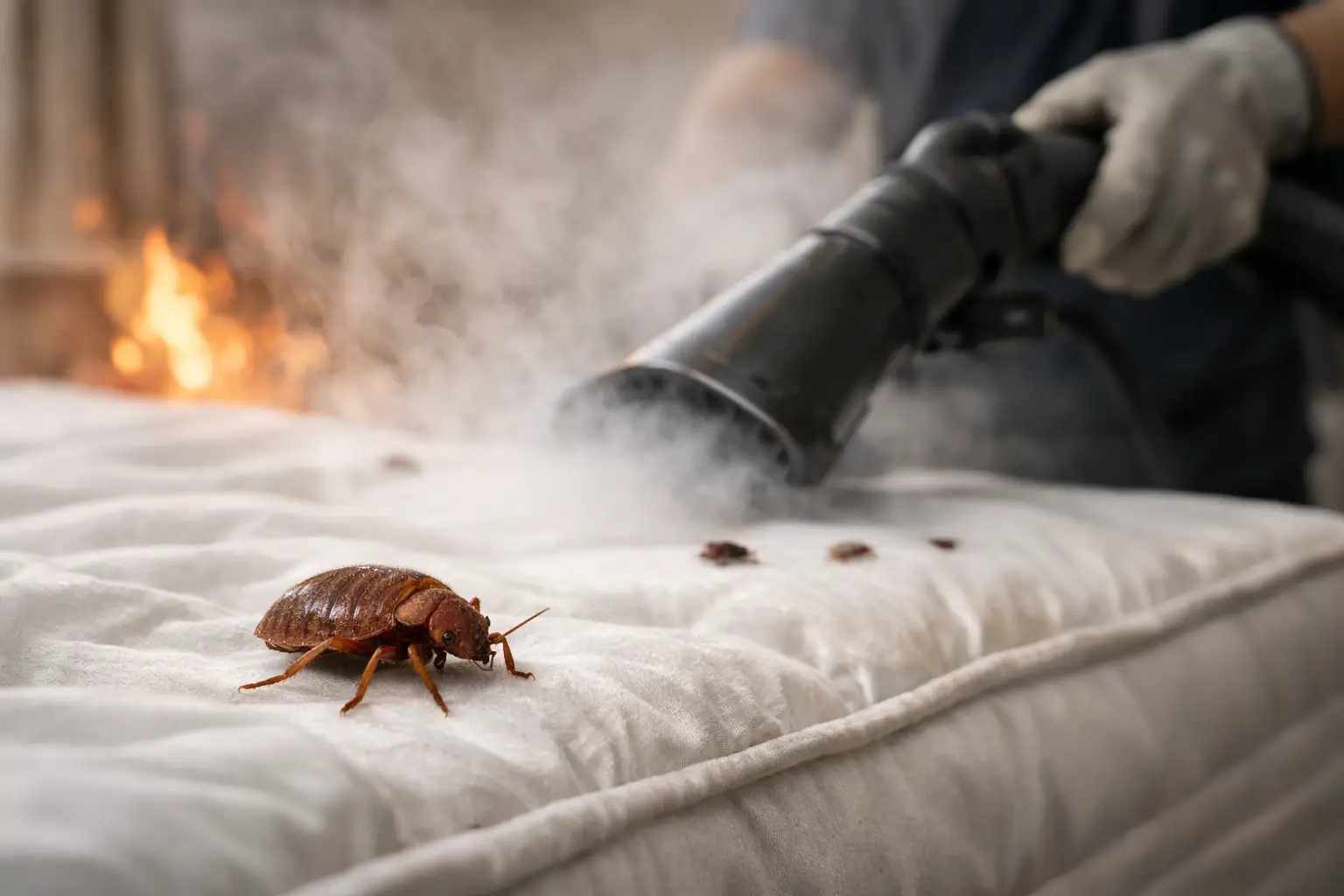
A bed bug treatment is only as effective as the temperature reached inside the places bed bugs actually hide. So, can bed bugs survive heat treatment? Yes, if the treatment is incomplete, too cool, too short, or poorly monitored. But when performed correctly with professional equipment and trained technicians, thermal remediation is designed to kill bed bugs at every life stage – including eggs – in a single treatment cycle.
That distinction matters. Bed bugs do not need much space to survive. They can shelter in mattress seams, furniture joints, wall voids, baseboards, electrical outlets, luggage, and clutter. Raising the temperature in the middle of a room is not enough. Effective heat treatment means bringing lethal heat to those protected hiding places and verifying it throughout the treatment area.
Can Bed Bugs Survive Heat Treatment When It Is Done Properly?
Bed bugs are highly vulnerable to sustained heat. Adults, nymphs, and eggs die when exposed to lethal temperatures for the required amount of time. Professional thermal remediation typically heats the treatment space well above the minimum lethal threshold, then maintains and monitors those temperatures long enough to penetrate furniture, fabrics, cracks, and other harborages.
The goal is not simply to make the room feel hot. It is to achieve a controlled, even heat profile throughout the entire treatment zone. Industrial heaters, high-volume fans, remote temperature sensors, and ongoing technician adjustments work together to eliminate cold areas where bed bugs could otherwise survive.
A properly planned heat treatment can be one of the fastest and most reliable ways to eliminate an active infestation without relying on repeated chemical applications. It is especially valuable for homes, apartments, hotels, health care settings, senior housing, vehicles, and other locations where fast resolution and minimal chemical exposure matter.
Why Bed Bugs Sometimes Survive Heat Treatments
When someone reports bed bugs after a heat treatment, the issue is not necessarily that heat does not work. More often, it comes down to coverage, preparation, monitoring, or a new introduction after the service.
Cold spots protect bed bugs
Dense furniture, tightly packed belongings, insulated voids, and poor air movement can create cooler pockets. A bed bug hiding deep inside a cluttered drawer, under a heavy pile of clothing, or within a poorly circulated wall area may not receive enough sustained heat.
This is why professional technicians use fans to move heated air and place sensors in high-risk locations, not just in open areas. Temperatures must be confirmed where bed bugs may be hiding, not assumed from a thermostat reading near the heater.
Eggs require complete exposure
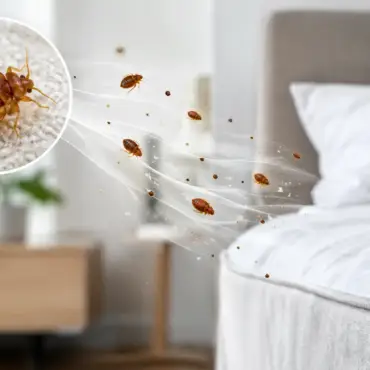
Bed bug eggs are often the reason incomplete treatments fail. They are small, difficult to see, and commonly cemented into protected seams and cracks. While heat can kill eggs, they must receive the required temperature for the required duration.
A treatment that heats the room quickly but does not allow enough time for heat to penetrate belongings can leave viable eggs behind. Those eggs may hatch later, leading people to believe the infestation returned when it was never fully eliminated.
Poor preparation limits heat circulation
Preparation is not busywork. It directly affects treatment success. Overfilled closets, tightly compressed storage, sealed plastic bags left in place, and excessive clutter can prevent hot air from moving through the room.
Some belongings also need special handling. Heat-sensitive items, certain medications, pressurized containers, candles, aerosols, and some electronics may need to be removed or protected according to the treatment plan. A qualified provider gives clear preparation instructions because every property has different contents and risk points.
Bed bugs may be reintroduced
A successful treatment does not prevent a new bed bug from entering later. Bed bugs can be brought in through travel, guests, used furniture, shared laundry areas, moving trucks, neighboring units, or workplace and transit exposure.
In multi-unit housing, addressing only one apartment may not be enough if there is active movement through adjoining units, hallways, utility pathways, or shared furniture. Property managers and housing operators need a coordinated inspection and remediation plan that reflects how bed bugs travel through the building.
What Professional Heat Treatment Looks Like
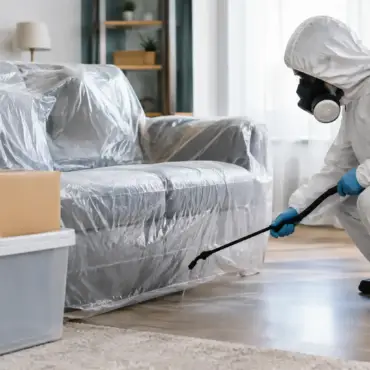
Professional thermal remediation is a managed process, not a space heater left running in a room. The equipment used for bed bug work is designed to raise temperatures safely and consistently across the treatment area. Technicians place heaters and fans strategically, monitor remote sensors, reposition equipment as needed, and maintain lethal conditions for the prescribed treatment period.
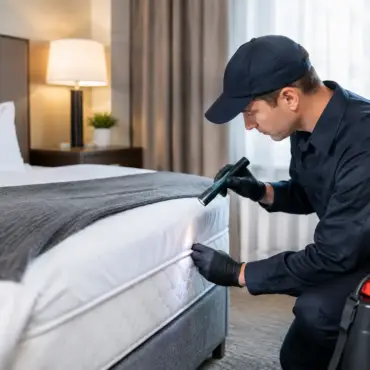
Before treatment begins, the property is inspected and the scope is identified. In a single-family home, that may mean treating specific bedrooms and living spaces. In a hotel, care facility, apartment building, or full commercial property, it may involve room-by-room planning, adjacent-area inspections, access coordination, documentation, and discreet operational scheduling.
During the heat cycle, technicians watch temperatures in furniture, along room perimeters, in closets, and in other likely harborages. This monitoring is the difference between hoping the infestation is gone and having evidence that the treatment reached the necessary conditions.
After treatment, a good provider will explain what to expect, how to avoid reinfestation, and whether follow-up inspection is appropriate. In complex buildings, ongoing monitoring can be a practical safeguard, particularly when there are multiple occupants or a history of bed bug activity.
Why DIY Heat Methods Are Risky
Portable heaters, steamers, dryers, and space heaters can have a role in limited bed bug control, but they are not a substitute for whole-room thermal remediation. A dryer can kill bed bugs on items that can safely be dried at high heat. A steamer can treat exposed seams or cracks when used correctly. Neither method reliably reaches every hidden bed bug across an infested room or property.
Trying to heat an entire room with consumer equipment introduces real risks. Uneven temperatures can leave survivors behind, while excessive or uncontrolled heat can damage property or create fire hazards. Bed bugs may also move away from an uncomfortable heat source into cooler nearby areas if the process is not properly contained and managed.
Chemical foggers are another common mistake. They often fail to reach bed bugs in deep harborages and may cause bugs to scatter, making the infestation harder to eliminate. A specialized treatment plan is more effective than experimenting with products that create disruption without full control.
Heat Treatment Is Fast, But It Is Not Careless
One-day treatment capability is a major advantage of professional heat remediation. Many infestations can be addressed in a single day, allowing residents to return to a more normal routine quickly and helping hospitality or commercial operators reduce downtime.
Still, speed does not mean shortcuts. The exact treatment time depends on the size of the area, construction features, infestation level, contents, clutter, and the number of rooms or units involved. A simple bedroom treatment and a full-building remediation require different planning, equipment, staffing, and monitoring.
Heat is also non-toxic, which makes it appealing to families, tenants, and facilities seeking an alternative to repeated pesticide exposure. However, non-toxic does not mean no preparation or no safety rules. The property must be prepared correctly, and the treatment must be managed by technicians who understand heat movement, bed bug behavior, and the protection of sensitive contents.
When to Call a Bed Bug Heat Specialist
If you are seeing live bugs, waking with unexplained bites, finding dark spotting on bedding or furniture, or receiving reports from tenants or guests, early action can limit the spread. Bed bugs reproduce quickly, and waiting often turns a contained issue into a larger, more expensive one.
BC Bed Bug Expert approaches thermal remediation as a specialized service, with planning and equipment suited to everything from private homes to complex multi-unit and institutional properties. The focus is complete elimination, discreet service, and practical support when the situation feels urgent.
Do not rely on a hot room, a single thermometer, or a temporary drop in activity as proof that bed bugs are gone. The reassuring answer is that bed bugs cannot survive a properly executed, fully monitored heat treatment. The next step is making sure the treatment is designed around your property, your belongings, and every place the infestation could be hiding.