A bed bug sighting at 2 p.m. can be alarming, but it gives you useful information. Are bedbugs visible in daylight? Yes. They can be seen during the day, especially when an infestation is established, their hiding places have been disturbed, or they are actively searching for a blood meal. The harder question is whether you will recognize one before the problem spreads.
Bed bugs are experts at staying out of sight. They do not disappear when the sun comes up. They simply spend most daylight hours tucked into tight, protected spaces near where people rest. Knowing what to look for can help you respond quickly without throwing away furniture, spreading the infestation, or relying on treatments that only reach the bugs you can see.
Are Bedbugs Visible in Daylight or Only at Night?
Bed bugs are primarily nocturnal. They are most active at night because sleeping people are still, warm, and easier to feed on unnoticed. But they are not afraid of light, and daylight does not kill or repel them.
You may see bed bugs during the day if they are hungry, if a room has heavy activity at night, or if their usual hiding place has been moved, cleaned, or treated. A large infestation can also force some bugs farther from their preferred cracks and seams. In apartments, hotels, senior housing, and other multi-unit settings, bed bugs may travel between rooms or units in search of a host.
Seeing one in broad daylight does not automatically tell you how large the infestation is. It does mean the situation deserves a professional inspection. A single visible bug can be a hitchhiker. It can also be the small part of a hidden population living in the bed frame, baseboards, upholstered furniture, luggage, or adjacent rooms.
What Does a Bed Bug Look Like?
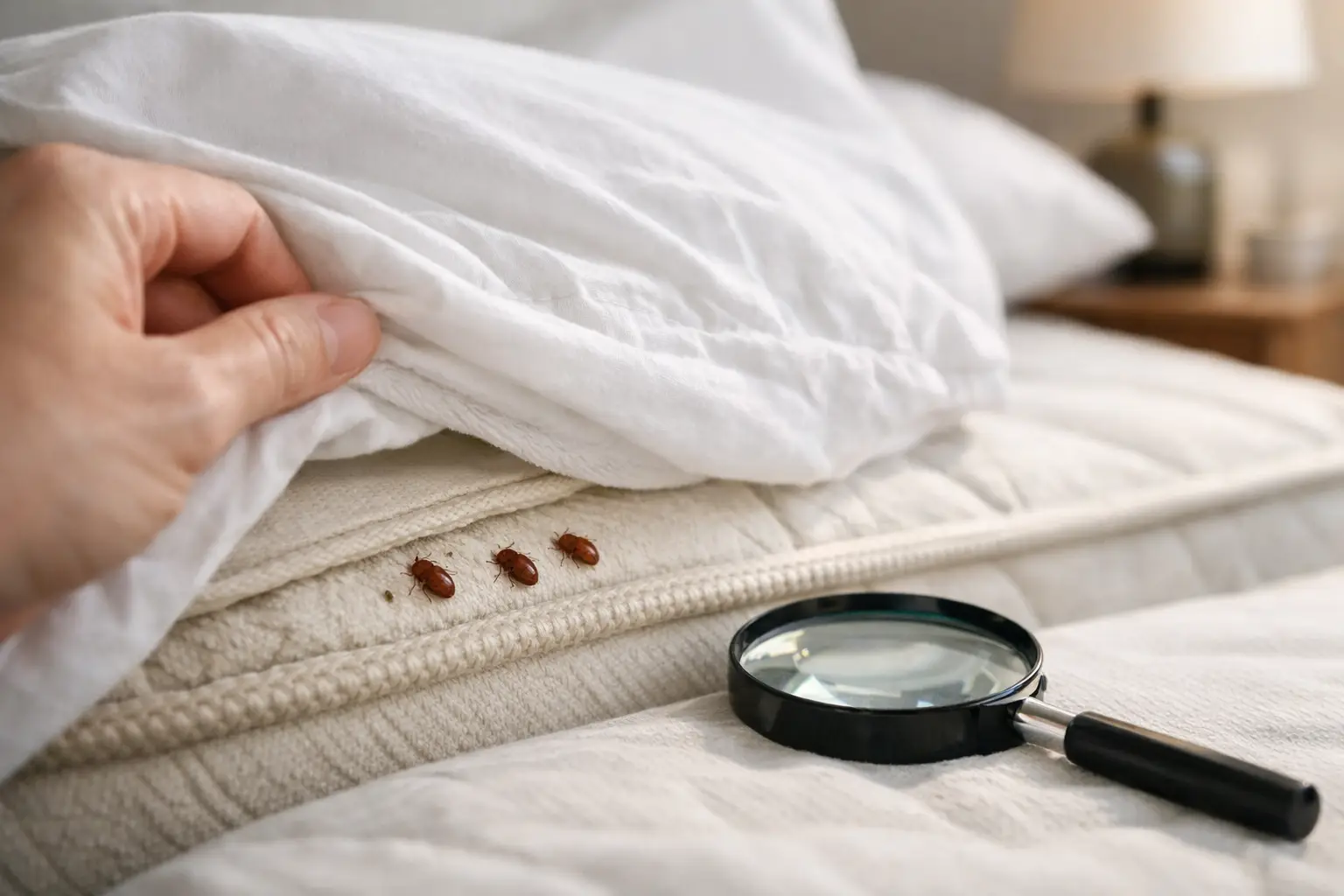
Adult bed bugs are small, flat, oval insects with a reddish-brown color. Before feeding, they are roughly the size and shape of an apple seed. After feeding, they become fuller, darker, and more elongated.
Young bed bugs, called nymphs, are much easier to miss. They are smaller and pale yellow to nearly translucent until they feed. Eggs are tiny, white, and often attached in protected cracks. This is one reason a quick visual check can create false confidence: you may spot an adult while missing eggs and immature bugs nearby.
Bed bugs do not jump or fly. If you see a small brown insect moving quickly across a mattress, wall, headboard, or upholstered chair, capture it in a sealed container or take a clear photo if possible. Do not crush it on bedding or furniture, since that can make identification more difficult.
Common Daytime Hiding Places
Most bed bugs stay within a short distance of where people sleep or sit for long periods. Start with the areas closest to the bed, but do not stop at the mattress. Bed bugs can hide in narrow gaps no thicker than a credit card.
Check mattress seams, tags, piping, and tufts. Inspect the box spring, especially the underside and fabric cover, along with joints and screw holes in the bed frame and headboard. Nearby nightstands, drawer joints, curtains, upholstered seating, baseboards, picture frames, electrical outlets, and loose wallpaper can also provide shelter.
In hospitality rooms, health care facilities, offices, and vehicles, the same rule applies: inspect the locations where people remain still. Seams in chairs, wheelchairs, recliners, luggage racks, and vehicle upholstery can be just as relevant as a bed.
Signs You May Have Bed Bugs Even If You Do Not See One
Visible bugs are only one part of the evidence. In many cases, the more reliable clues are the marks bed bugs leave behind. Look for dark, ink-like spotting around seams, joints, and harborages. These small stains are bed bug droppings and may smear slightly when dampened.
You may also find shed skins, tiny pale eggs, or small rust-colored blood spots on sheets and pillowcases. Bites can be a clue, but bites alone are not proof. Reactions vary widely. Some people develop itchy welts, while others have little or no visible reaction. Mosquitoes, fleas, skin conditions, and other causes can look similar.
A musty odor is sometimes associated with significant infestations, but it is not a dependable early warning sign. By the time an odor is noticeable, there may already be a substantial number of bugs present.
Why Daytime Sightings Need a Careful Response
The instinct to immediately spray, vacuum aggressively, or move belongings into another room is understandable. Unfortunately, rushed do-it-yourself action can scatter bed bugs into new hiding places. Moving an infested mattress to a hallway, donating furniture, or sleeping in another room can extend the problem beyond its original location.
Avoid using foggers or bug bombs. They rarely reach the hidden cracks where bed bugs and eggs are located, and they can drive insects deeper into walls, furniture, or adjacent rooms. Random over-the-counter products may kill a few exposed bugs while leaving the core infestation intact.
Instead, contain the situation. Keep sleeping arrangements consistent unless a professional gives you different instructions. Place suspected clothing, linens, or soft items in sealed bags before moving them. If items can be safely dried, a high-heat dryer cycle can help kill bed bugs, but it is not a complete room treatment. Do not rely on laundering alone to solve an infestation in furniture, walls, or structural gaps.
For tenants and property managers, document what you find and report it promptly. Early reporting protects residents and reduces the risk of spread to neighboring units. For hotel and facility operators, a discreet, organized response is critical. Taking the room out of service, preserving evidence for inspection, and assessing surrounding areas can prevent a minor incident from becoming an operational disruption.
When Professional Inspection Makes Sense
A professional inspection is the right next step when you have seen a suspected bed bug, found spotting or shed skins, received bite complaints, or have a confirmed exposure from travel, a guest, a tenant, or a neighboring unit. It is particularly valuable in multi-unit buildings because bed bugs can move through wall voids, utility routes, hallways, and shared furnishings.
The inspection process should focus on identifying the insect, locating harborages, and determining the treatment scope. This matters because bed bug work is not one-size-fits-all. A single bedroom requires a different plan than a hotel floor, a care facility, a vehicle fleet, or an apartment building with multiple affected units.
BC Bed Bug Expert specializes exclusively in bed bug remediation and uses industrial thermal treatment to heat affected spaces to temperatures that kill bed bugs at every life stage, including eggs. Heat treatment can address bugs hidden deep in furniture, cracks, and other difficult-to-reach areas without filling your home or facility with conventional pesticides. Proper setup, monitoring, and preparation are what make the difference.
What to Do Tonight if You Suspect Bed Bugs
Do not panic, and do not start moving possessions from room to room. Keep a clear record of what you saw and where you saw it. If you captured a specimen, save it for identification. Bag clothing and linens only when necessary, and avoid placing loose items in common areas, vehicles, or other bedrooms.
If you are responsible for a business or multi-unit property, communicate carefully and act quickly. Bed bug concerns carry a stigma, but they are not a sign of poor cleanliness. They are transported by people and belongings, and they can affect any property. A discreet response based on inspection and targeted treatment protects people, operations, and reputation.
A daylight sighting is not a reason to wait for nighttime confirmation. It is a reason to get a clear answer while the problem is still manageable. The fastest route back to a comfortable home, room, or facility is accurate identification followed by treatment that reaches where bed bugs actually live.

