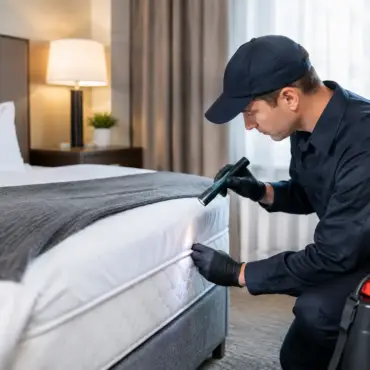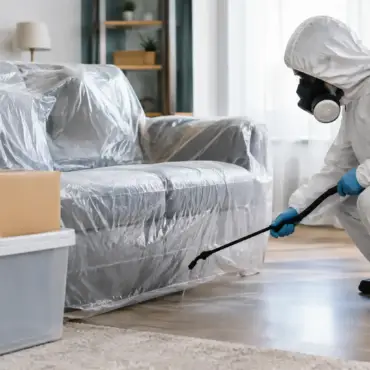

A bed bug found on a mattress seam is rarely the only bed bug in the room. That is the central issue in the whole room versus spot treatment decision. Treating the place where you saw the insect can feel faster and less disruptive, but bed bugs are built to hide in places most people never think to check: behind baseboards, inside furniture joints, under carpet edges, around outlets, and within nearby belongings.
For an active infestation, the goal is not to kill the bugs that are visible today. The goal is to eliminate every life stage, including eggs, before the infestation spreads to another room, unit, guest space, or vehicle. The right treatment scope depends on what a professional inspection finds, how long the activity has been present, and the type of property involved.
What Spot Treatment Actually Covers
Spot treatment targets known or suspected bed bug harborages rather than treating the complete room. A technician may focus on a bed frame, mattress, upholstered chair, luggage area, or a defined section of a room where activity has been confirmed.
There are situations where this approach has a role. A single item brought into a property may be treated before it is moved indoors. A carefully inspected vehicle with activity confined to a small area may require a more targeted plan. In commercial or multi-unit settings, localized treatment can also be part of a larger response while inspections determine whether adjacent spaces are affected.
The limitation is that bed bugs do not stay neatly contained. They travel short distances to feed, then retreat to tight, dark cracks. When a sleeping area is treated, bugs may already be hiding behind the headboard, inside a nightstand, beneath flooring transitions, or in another piece of furniture across the room. Eggs are especially easy to miss because they are tiny, pale, and often cemented into concealed seams or crevices.
A spot treatment may reduce the number of visible bugs, but reducing activity is not the same as ending an infestation. When treatments miss hidden bugs or eggs, the surviving population can rebuild. This is one reason people can experience a frustrating cycle of bites, repeat applications, and discarded belongings without getting lasting relief.
Whole Room Versus Spot Treatment: The Key Difference
Whole-room treatment is designed around the way bed bugs actually live. Instead of relying on the technician to locate every individual insect and hiding place, the treatment reaches the entire enclosed environment where bed bugs and eggs may be present.
With professional thermal remediation, industrial equipment raises the temperature throughout the room to levels lethal to bed bugs at every life stage. Heat is monitored carefully at multiple points so that difficult areas, such as furniture interiors, wall edges, and cluttered zones, reach the required treatment temperature. The process is controlled, not simply a matter of making a room hot.
That distinction matters. Household heaters, space heaters, steam used inconsistently, and do-it-yourself heat attempts can leave cold spots where bed bugs survive. They can also create serious fire, electrical, and property-damage risks. Professional heat treatment uses purpose-built equipment, airflow management, and trained technicians to heat the room evenly and safely.
Spot treatment is based on what can be identified and accessed. Whole-room heat treatment is based on eliminating what may be hidden. For most established bedroom infestations, that broader coverage provides a far more dependable path to resolution.
Why Eggs Change the Treatment Decision
Bed bug eggs are a major reason repeated treatment plans fail. An adult bed bug may be seen on a sheet or mattress, but eggs can be hidden in a screw hole, behind a picture frame, or deep inside the structure of a bed frame. If those eggs survive, newly hatched nymphs can restart the problem days or weeks later.
Many chemical approaches require multiple visits because they may not reliably eliminate eggs in one application. Follow-up treatments are then intended to kill newly hatched bugs before they mature and reproduce. That process can work when every visit is completed on schedule and the infestation remains contained, but it also extends the stress, preparation, and uncertainty.
Whole-room thermal treatment addresses adults, nymphs, and eggs in the same treatment cycle when performed correctly. For homeowners, tenants, and property operators, that can mean a faster return to normal life. It also reduces the likelihood that an active issue continues quietly while people wait for the next service appointment.
When Whole-Room Treatment Is the Stronger Choice
Whole-room treatment is usually the better option when bed bugs have been found in or near a sleeping area, when bites are recurring, or when the timeline of the infestation is unclear. It is particularly valuable in furnished rooms, guest rooms, senior housing, health care spaces, and hospitality properties, where hidden harborages are plentiful and the cost of recurrence is high.
In a multi-unit building, a narrow treatment plan can create another concern: bed bugs may move through wall voids, hallways, utility penetrations, or shared furnishings. Treating only the room where a report was made may not address the full extent of the issue. A professional assessment may recommend inspection of neighboring units or a coordinated strategy to protect the property as a whole.
For hotels and short-term accommodations, speed and discretion are equally important. Closing a room repeatedly for chemical applications affects revenue and can damage guest confidence. A properly planned heat treatment can often resolve an affected room in one day, allowing operators to move forward with a clear remediation record and less prolonged disruption.
Whole-room treatment also helps preserve belongings. Many people facing bed bugs assume they must throw away beds, sofas, clothing, or luggage. In many cases, those items can be treated effectively rather than replaced. That can make professional heat treatment less costly than months of repeat services, lost occupancy, and unnecessary disposal.
When a Targeted Approach May Make Sense
Spot treatment is not automatically the wrong choice. It may be appropriate when a qualified inspection confirms that exposure is limited to a single treatable item or tightly defined area. It may also be used as a preventive measure for an item before it enters a clean environment.
The key word is confirmed. A treatment plan should not be based solely on where someone found one bug. Bed bugs are nocturnal, mobile, and exceptionally good at hiding. What appears localized to a mattress can be part of a larger room-level infestation.
Targeted work can also complement a broader plan. For example, a technician may treat a specific item, inspect adjoining spaces, and recommend whole-room thermal remediation for the affected room if evidence shows established activity. The decision should follow the evidence, not the appeal of the lowest upfront price.
Compare the Real Costs, Not Just the Initial Quote
Spot treatment often looks less expensive at the beginning because it treats less space and may use fewer resources during the first visit. But the initial price is only one part of the cost. If bugs survive in untreated hiding places, additional treatments, time away from the room, replacement furniture, missed work, tenant complaints, or lost bookings can quickly outweigh the savings.
Whole-room heat treatment has a higher level of planning and equipment behind it, but it is built for complete elimination in a single treatment cycle. The value is not just in the treatment itself. It is in reducing the chance that you will still be dealing with the same infestation weeks later.
Preparation also matters. A reputable specialist will explain what needs to be removed, what can remain in place, how sensitive items are handled, and what residents or staff should expect on treatment day. Good preparation supports treatment success without forcing people to empty their lives into garbage bags or throw away usable belongings.
Choose a Plan That Matches the Risk
If there is evidence of bed bugs in a room, treating only the visible location is a gamble unless a detailed inspection proves the issue is truly isolated. The longer bed bugs have had to establish themselves, the less likely a narrow response will be enough.
BC Bed Bug Expert approaches treatment with the urgency these situations deserve: careful assessment, discreet service, and industrial-grade thermal remediation designed to eliminate bed bugs and eggs without filling your living or working space with toxic chemicals. Whether the property is a single bedroom, a vehicle, a hotel room, or a complex multi-unit building, the treatment scope should be built around complete resolution.
The most reassuring plan is the one that gives hidden bed bugs nowhere left to survive. Acting early, before activity spreads beyond the original room or unit, protects your property, your peace of mind, and the people who depend on the space being safe.