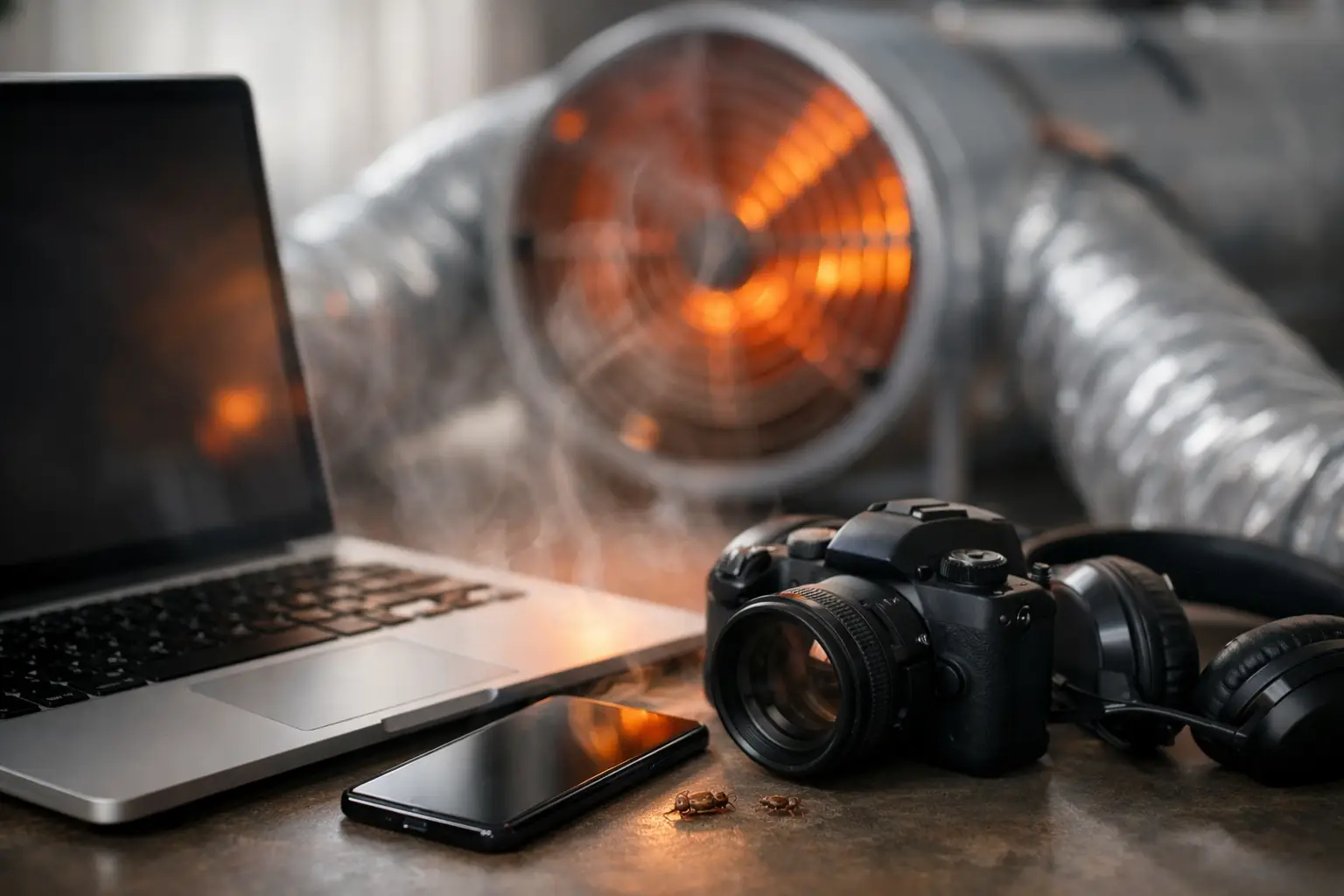
A bed bug heat treatment has one job: raise the treated space to a lethal temperature long enough to kill bed bugs at every life stage, including eggs. But when you look around a room full of TVs, computers, chargers, game consoles, and appliances, the question is immediate: can heat damage electronics? The honest answer is that it can – if items are not assessed, prepared, and treated correctly. That is exactly why professional heat remediation is not simply turning up the temperature in a room.
Industrial thermal remediation is designed to eliminate bed bugs while managing the heat exposure of the property and its contents. With the right equipment, monitoring, airflow, and preparation, many common electronics can remain in place. Some items need to be removed. Others require specific handling. The difference matters when you want fast bed bug elimination without risking expensive belongings.
Can Heat Damage Electronics? It Depends on the Item
Heat is hard on electronics because devices contain materials that expand, soften, lose charge capacity, or become unstable at high temperatures. Bed bug treatment temperatures are typically maintained within a controlled lethal range, not allowed to spike without oversight. Even so, a device’s safe operating temperature is not the same as its safe storage temperature, and neither automatically means it is safe for a prolonged heat cycle.
The greatest concern is usually not the screen or plastic exterior. It is the internal battery, adhesive, lubricant, memory media, or delicate components inside. Lithium-ion batteries, for example, deserve special attention. Heat can shorten their useful life, cause swelling, or create a safety concern in severe cases. Devices with large batteries or batteries that cannot easily be removed should always be discussed during pre-treatment planning.
Most modern televisions, desktop computers, monitors, and many small household electronics can often tolerate professional heat treatment when they are powered down, properly positioned, and treated under controlled conditions. That does not mean every device is automatically safe. Age, condition, manufacturer specifications, battery type, and placement in the room all affect the decision.
Why Professional Monitoring Makes the Difference
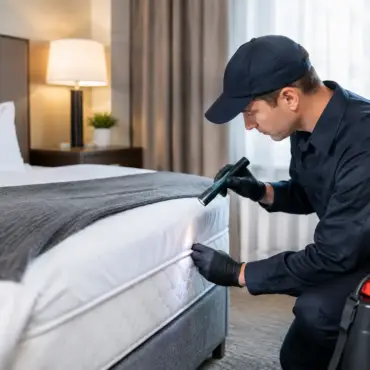
A bed bug heat treatment is not a one-temperature event. Heat has to move through furniture, wall voids, cluttered areas, and the protected seams where bed bugs hide. A professional team uses industrial heaters, high-volume air movers, and multiple temperature sensors to distribute heat evenly and verify that target conditions are reached throughout the space.
That controlled process protects more than the treatment result. It helps prevent localized overheating around electronics, furniture, and other sensitive contents. A device sitting directly in the path of a heater or trapped in a hot pocket behind heavy furniture faces a different risk than one placed where air circulates properly.
Technicians also monitor temperatures continuously rather than relying on a thermostat across the room. This matters because bed bugs can survive in cooler pockets, while an unmanaged hot spot can expose belongings to unnecessary stress. Proper heat treatment requires both lethal temperatures and careful control.
Electronics That May Need to Be Removed
Preparation instructions should be tailored to the property, but certain items commonly need to come out of the treatment area or receive special direction. These include items with heat-sensitive batteries, flammable materials, pressurized components, or delicate internal mechanisms.
Examples may include:
- Lithium-ion battery packs, spare phone batteries, power banks, and some cordless tool batteries
- Portable devices such as laptops, tablets, phones, cameras, and e-readers, especially when their batteries cannot be removed
- Vinyl records, wax items, candles, cosmetics, medications, and aerosol or pressurized containers
- Certain medical devices, oxygen equipment, mobility-device batteries, and manufacturer-sensitive equipment
- Older electronics, antiques, film, photographs, and other irreplaceable media
A professional team may advise that some of these belongings be bagged, inspected, or treated separately. Do not move items to another room without instructions. Carrying an infested item through the home can spread bed bugs to an untreated area and make the problem harder to solve.
For commercial properties, the same principle applies at a larger scale. Hotels, senior housing facilities, offices, and health care settings may have specialized equipment, network hardware, medical devices, or security systems that require advance coordination. A detailed walkthrough prevents surprises on treatment day and keeps operations safer.
What to Do With Computers, TVs, and Gaming Systems
Do not assume you need to throw out electronics because of bed bugs. Bed bugs may hide around electronics because the units are warm and have small crevices, but disposing of a television or computer is rarely the first answer. It can be costly, stressful, and unnecessary.
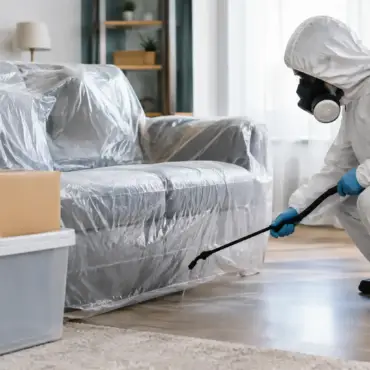
Before treatment, power down devices fully and unplug them unless your technician gives different instructions. Remove loose batteries and detachable battery packs where appropriate. Avoid wrapping devices in thick blankets, plastic, or sealed containers unless specifically instructed. Wrapping can interfere with airflow and create insulated pockets where bed bugs may survive.
Keep cords organized and off the floor when possible. This helps technicians move air effectively and inspect the room. If a device must stay in place, it may need to be repositioned so heat can circulate around it rather than concentrate against one side.
For desktop computers and gaming systems, do not attempt to spray chemicals into vents or take apart the unit unless a qualified professional tells you to. Bed bugs are small, but improvised treatment can damage the equipment or push insects deeper into inaccessible spaces. Heat treatment works best as part of a complete, planned process.
The Risks of DIY Heat Treatments
Space heaters, portable heaters, propane devices, and improvised temperature setups can create serious risks. They may start a fire, damage floors and furnishings, overload electrical circuits, or create uneven heat that misses bed bugs entirely. A room can feel extremely hot while protected hiding spots remain below lethal temperatures.
DIY heat also creates the electronics problem people are trying to avoid. Without calibrated sensors, airflow management, and trained oversight, there is no reliable way to know whether a laptop has been exposed to excessive heat or whether the far side of a mattress stayed too cool to kill eggs.
Bed bugs are not a problem to solve by making a room generally uncomfortable. Successful thermal remediation requires verified conditions throughout the treatment zone. One surviving pregnant female can restart the infestation.
How to Prepare Without Spreading Bed Bugs
Your preparation instructions should come from the treatment provider, not a generic checklist online. Every property is different. A single-bedroom apartment, a detached home, a hotel room, and a multi-unit building each require a different plan for contents, access, adjacent spaces, and electronics.
Still, a few rules are consistent. Do not remove belongings from the treatment area until you have been told what can safely leave. Do not place possibly infested devices in a vehicle or at a relative’s home. Tell the team about home offices, gaming equipment, medical devices, smart-home systems, aquarium equipment, and any electronics that are especially valuable or difficult to replace.
Photos of the room and a list of sensitive items can help resolve questions before treatment day. This is particularly useful for property managers and hospitality operators coordinating multiple rooms. Early planning reduces downtime, protects equipment, and prevents last-minute decisions under pressure.
A Safer Way to Eliminate Bed Bugs
Heat is one of the most effective non-toxic methods for eliminating bed bugs and their eggs in a single treatment cycle, but only when it is delivered by trained specialists using purpose-built equipment. At BC Bed Bug Expert, the process begins with a practical assessment of the infestation, the space, and the contents that need special care.
There are trade-offs. Removing every electronic device may feel safer, but unnecessary removal can spread bed bugs and complicate treatment. Leaving every item in place without an assessment can create avoidable risk. The right approach is item-specific and property-specific, with clear preparation instructions before heaters are brought in.
If you are worried about a particular device, ask before treatment day – especially if it contains a battery, is medically necessary, is business-critical, or cannot be replaced. A qualified heat treatment provider should give you a direct answer and a workable plan. That clarity is what lets you protect your belongings while ending the infestation for good.