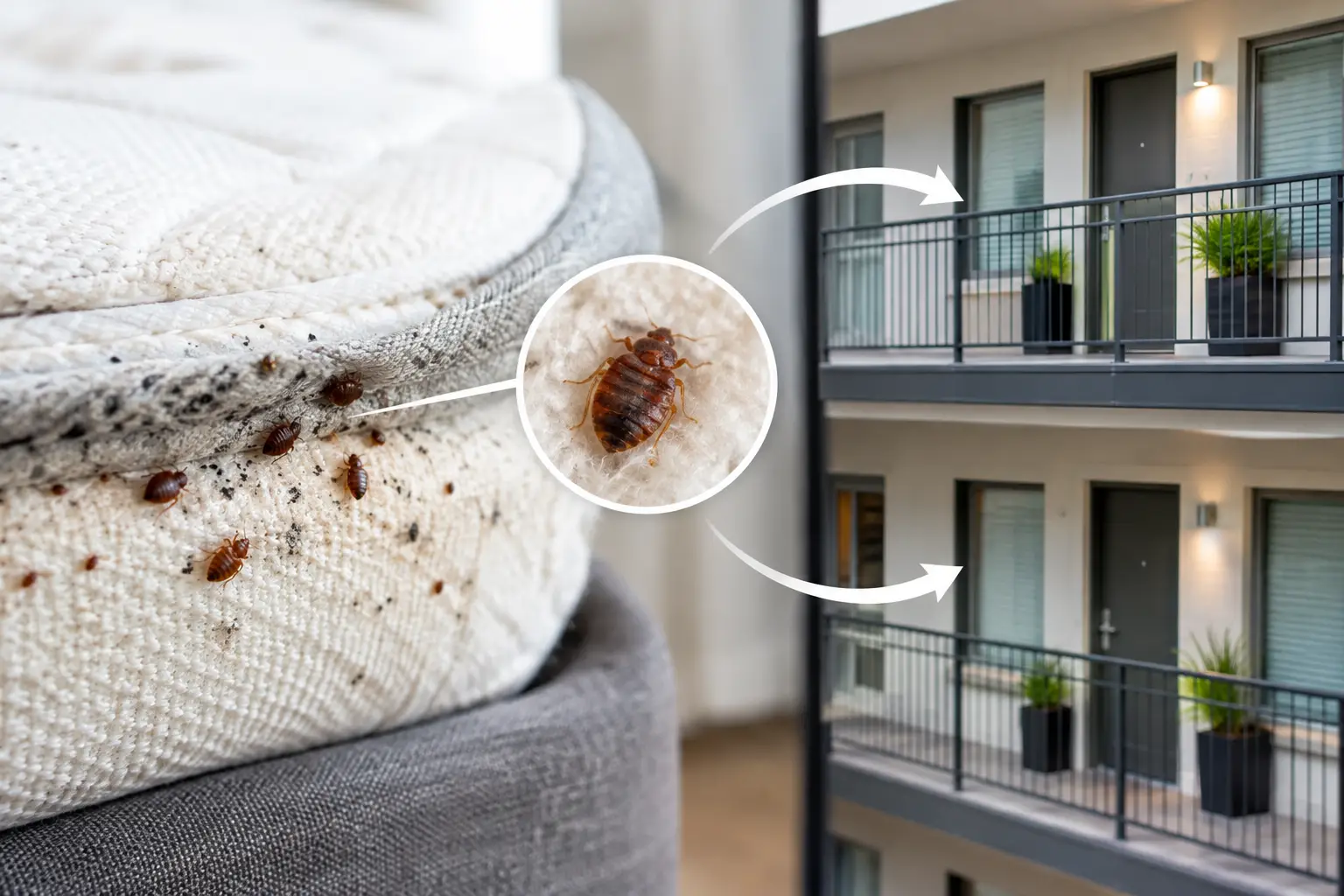
A bed bug report in one apartment is stressful. Similar reports in neighboring units, however, can signal a larger building issue. The most reliable signs bed bugs spread between units are patterns: activity appearing along shared walls, repeat complaints after isolated treatments, or new evidence in units connected by hallways, plumbing, or furniture movement. Acting early protects residents, limits disruption, and gives a property the best chance of stopping the infestation before it expands.
Why bed bugs move between apartments
Bed bugs do not fly or jump, but they are highly effective hitchhikers. They can move through cracks around baseboards, gaps beneath doors, utility penetrations, shared wall voids, electrical outlets, plumbing lines, laundry rooms, corridors, and elevator areas. They may also travel on bags, carts, bedding, used furniture, or clothing.
In multi-unit housing, the source is not always the first unit where bites or bugs are reported. A resident may notice bites first because they react strongly, while a neighboring unit has had hidden activity for weeks. Conversely, bed bugs can be introduced by a visitor, a move-in, secondhand furnishings, travel luggage, or an employee or contractor carrying items from one location to another.
That is why treating only the reported unit can sometimes create a frustrating cycle. If adjacent spaces are not assessed, surviving bed bugs may continue moving through the building and reappear where the problem was first discovered.
Signs bed bugs spread between units
One bug found in a hallway does not automatically mean the entire building is infested. Still, certain patterns call for immediate, coordinated inspection rather than guesswork.
Complaints cluster around connected units
Pay close attention when reports arise in units above, below, beside, or directly across from an affected apartment. Bed bugs often follow the path of least resistance through shared structural openings. In a high-rise, vertical movement around plumbing and utility chases can be just as relevant as a shared bedroom wall.
A property manager should also look beyond the obvious neighboring apartments. Units sharing laundry facilities, trash areas, storage rooms, staff spaces, or common corridors may need assessment, depending on the building layout and the evidence found.
Activity returns after a single-unit treatment
A resident may report fewer bites for a short time, then see fresh evidence again. This does not always mean treatment failed. It can mean bed bugs remained in an untreated adjoining area and moved back after the original unit was serviced.
Repeat activity is especially concerning when it appears near the same shared wall, outlet, baseboard, or bedroom location. Repeated chemical applications without a complete inspection plan can prolong the situation, increase resident frustration, and make it harder to identify the true scope.
Evidence appears near shared walls and utility areas
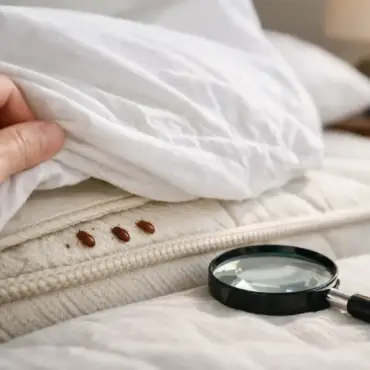
Bed bug evidence is more meaningful than bites alone. Look for live bugs, pale shed skins, tiny pearly eggs, dark fecal spotting, or small blood marks on sheets and mattresses. In multi-unit properties, evidence around wall junctions, pipe openings, cable penetrations, outlet covers, and baseboards may indicate a route between units.
Bed bugs are small and can hide in places most people do not think to inspect: bed frames, upholstered furniture seams, curtain folds, picture frames, luggage, recliners, wheelchairs, and cracks in flooring. A lack of visible bugs does not rule them out. Their daytime hiding behavior is exactly why professional inspection matters.
Multiple residents report unexplained bites or itching
Bites can be a warning sign, but they are not proof of bed bugs. Skin reactions vary widely, and bites can be caused by other insects or skin conditions. Some people have no visible reaction at all.
What raises concern is a pattern of complaints from nearby units, particularly when residents notice symptoms after sleeping or resting in the same areas where physical evidence is later found. Management should take reports seriously without making assumptions or publicly identifying residents. Discretion is part of effective bed bug response.
Bed bugs are found in common areas or during turnover
A bed bug found in a laundry room, moving cart, hallway, office, staff break room, or vacant unit deserves prompt investigation. Common areas can become transfer points, particularly in buildings with frequent move-ins, housekeeping operations, shared furnishings, or high resident turnover.
Vacant units are not automatically safe. Bed bugs can remain hidden for long periods without feeding. Before a new resident moves in, an inspection can prevent an avoidable complaint and protect the property from a rapid spread.
What to do when spread is suspected
The fastest path forward is not to blame a tenant or ask everyone to throw away furniture. Both responses create unnecessary stress and often make the situation worse. Bed bugs are a building issue that requires a calm, evidence-based response.
First, document the location and date of every credible report. Note where evidence was found, which units share walls or utility lines, and whether any furniture, staff equipment, or resident belongings recently moved between locations. Keep the information confidential and focused on solving the problem.
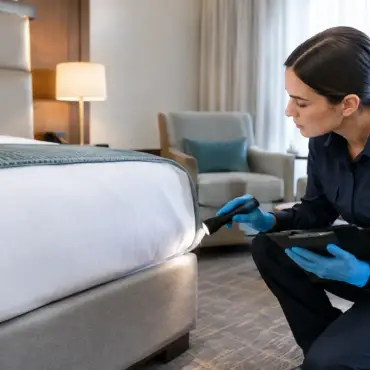
Next, arrange a thorough inspection of the reported unit and the most relevant surrounding units. The inspection zone depends on the building design, infestation level, and evidence found. In some cases, inspecting the units on both sides, above, and below is appropriate. In others, the assessment may need to extend farther through a connected stack or common area.
Residents should avoid moving beds, mattresses, furniture, or bags into hallways or neighboring apartments. They should also avoid using foggers, bombs, alcohol sprays, or random over-the-counter products. These measures can scatter bed bugs deeper into walls and furnishings while adding safety risks. Do not discard belongings unless a qualified professional recommends it. Many items can be treated successfully.
Why coordinated treatment matters in multi-unit buildings
Bed bug elimination succeeds when the treatment plan matches the actual scope of the problem. An isolated introduction in one unit may be resolved with a focused approach. Evidence across connected units requires coordination, clear communication, and treatment performed on a schedule that prevents reinfestation.
Thermal remediation is especially valuable when speed and complete elimination matter. Industrial heat raises temperatures throughout the treatment area to levels that kill bed bugs at every life stage, including eggs. Unlike repeated chemical-only approaches, a properly executed heat treatment can address bugs hiding deep in furniture, cracks, and other difficult locations during one treatment cycle.
The trade-off is preparation and planning. Residents and staff must receive clear instructions about heat-sensitive belongings, access, pets, medication, and timing. In a larger property, treatment may need to be staged by floor, wing, or affected area to protect operations and resident comfort. A specialist should build the plan around the property rather than applying a one-size-fits-all response.
For hospitality properties, health care settings, seniors housing, and occupied apartment buildings, discretion is also operationally important. The goal is to resolve the issue quickly without creating unnecessary alarm, exposing private resident information, or disrupting more of the property than necessary.
Communication can stop a small issue from becoming a building-wide problem
Residents are more likely to report early signs when communication is respectful and practical. Tell them what evidence to watch for, who to contact, and what not to move. Avoid language that suggests poor housekeeping caused the issue. Bed bugs can affect clean homes, luxury hotels, health care facilities, and any property where people and belongings come and go.
Property teams should also make it easy for maintenance, housekeeping, leasing, and front-desk staff to escalate a concern. A staff member who notices suspicious spotting on a mattress during turnover or finds a bug on a moving cart should know exactly who to notify. Early reporting prevents small clues from being overlooked.
BC Bed Bug Expert provides specialized inspection, preparation support, and industrial heat treatment for individual units, multi-unit buildings, and complex occupied facilities. The right response begins with identifying where bed bugs are hiding and how they may be moving – then treating the actual problem, not just the first complaint.
If activity is appearing in connected units, treat it as a time-sensitive property issue. A prompt professional assessment can replace uncertainty with a clear containment plan and help residents get back to sleeping comfortably.